
Quick answer: No — guinea pigs cannot eat onions, and the same goes for every member of the onion (allium) family. Onions, red onions, green onions, scallions, garlic, leeks, chives, and shallots are all toxic to guinea pigs, whether raw, cooked, dried, or powdered. They contain organosulfur compounds (disulfides and thiosulfates) that destroy a guinea pig’s red blood cells and cause a dangerous condition called hemolytic (Heinz body) anemia. There is no safe serving size — the correct amount to feed is zero. If your guinea pig has eaten any allium, watch for lethargy, pale gums, weakness, or dark urine and call an exotic vet right away.
Onions smell strong, taste sharp, and turn up in almost every kitchen — so it’s natural to wonder whether a nibble would hurt your guinea pig. The short version is that alliums are one of the clearest “never feed” foods in the guinea pig diet. This guide explains exactly why, covers every common onion-family vegetable, lists the warning signs of poisoning, and tells you what to do if your cavy gets hold of some.
Table of Content
Can Guinea Pigs Eat Onions and Other Alliums? (At a Glance)
Every vegetable in the allium family carries the same risk. Here’s the full lineup — and the answer is the same for all of them.
| Allium (onion family) | Safe for guinea pigs? | Why |
|---|---|---|
| Onion (white/yellow/red) | No | High in disulfides & thiosulfates → red blood cell damage, anemia, digestive upset |
| Green onion / scallion | No | Both the green tops and the bulb contain the toxic sulfur compounds — no part is safe |
| Garlic | No | Even more concentrated organosulfur compounds than onion; toxic in tiny amounts |
| Leek | No | Milder-tasting but still an allium — same sulfides, plus bloating and diarrhea risk |
| Chives | No | An allium herb; same toxic compounds despite the small leaves |
| Shallot | No | A type of onion — same risks, often more concentrated flavor |
| Cooked, dried, or powdered allium | No | Cooking and drying do not destroy the toxins; powder is concentrated and worse |
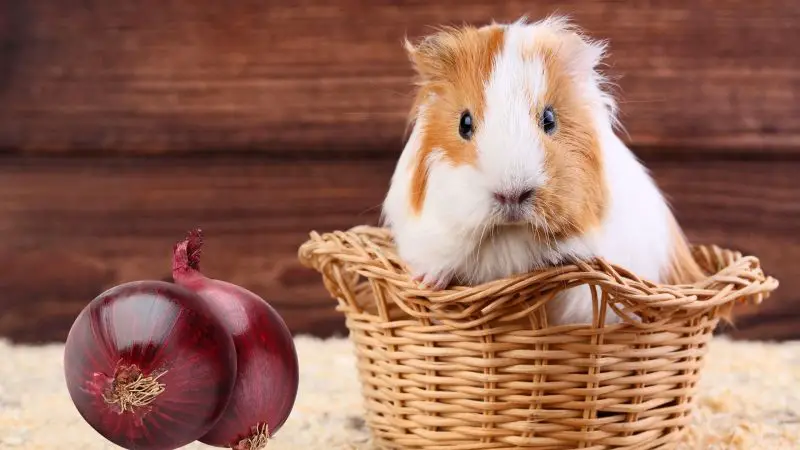
Why Are Onions and Alliums Dangerous for Guinea Pigs?
Onions, garlic, and the rest of the allium family contain organosulfur compounds — chiefly disulfides (such as n-propyl disulfide) and thiosulfates. These are the same chemicals that make your eyes water when you chop an onion. In small herbivores like guinea pigs, they cause real, measurable harm.
Hemolytic (Heinz body) anemia
The biggest danger is to the blood. Once eaten, the sulfur compounds trigger oxidative damage to red blood cells. The damaged cells clump into structures called Heinz bodies and are then destroyed by the body faster than they can be replaced. The result is hemolytic anemia — the blood can no longer carry enough oxygen. A guinea pig is small, so even a relatively little amount of onion or garlic delivers a proportionally large dose. Garlic is the most potent of the group, but every allium can cause this.
Guinea pigs can’t vomit
Unlike cats or dogs, guinea pigs are physically unable to vomit. Their digestive system only moves in one direction, so once a toxic food is swallowed there is no way for them to bring it back up. Anything harmful they eat must pass all the way through, which is exactly why “do not feed” foods like alliums are so risky — there’s no safety valve.
Digestive upset and bloating
On top of the blood toxicity, alliums irritate a guinea pig’s sensitive gut. Leeks in particular are known to cause bloating, gas, and diarrhea. Guinea pigs rely on a steady, balanced gut flora, and gas build-up (bloat) can become a medical emergency on its own.
Other irritation
The pungent compounds can also cause eye and nose irritation, excess salivation (drooling), and breathing discomfort. Onions and scallions are also relatively high in calcium, which — separate from the toxicity — can contribute to bladder sludge and stones in guinea pigs. None of this changes the bottom line: there is no amount of any allium that is safe to feed.
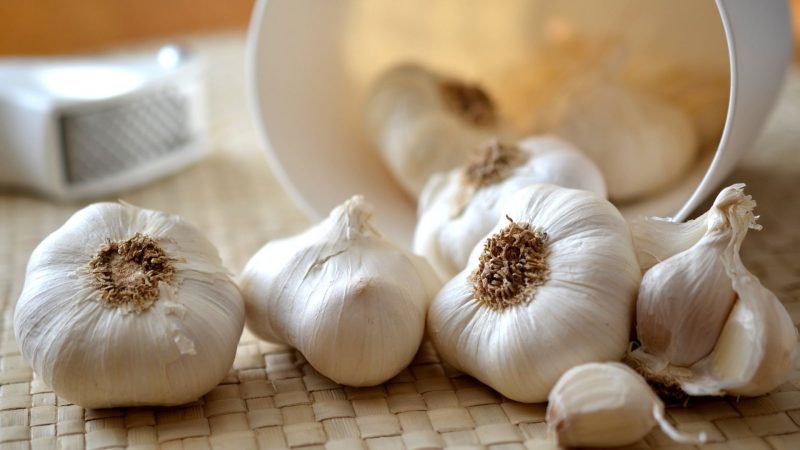
Symptoms of Allium Poisoning to Watch For
Signs can appear within hours, but anemia may take a day or more to fully show. If your guinea pig has eaten onion, garlic, leek, or any allium, watch closely for:
- Lethargy and weakness — unusually still, reluctant to move
- Pale or white gums (a key sign of anemia)
- Rapid or labored breathing
- Dark, reddish, or brown urine (a red flag for red blood cell breakdown)
- Loss of appetite and refusing favorite foods
- Drooling or excess salivation
- Diarrhea, bloating, or signs of stomach pain
Any of these signs is an emergency. Pale gums, dark urine, or collapse in particular mean you should get to an exotic or small-animal vet immediately — do not wait to “see how it goes.”
What to Do if Your Guinea Pig Ate Onion or Another Allium
- Remove any remaining allium from the cage or play area so they can’t eat more.
- Estimate how much was eaten — even a small piece is worth acting on, but the amount helps your vet judge urgency.
- Do not try to make your guinea pig vomit — they physically can’t, and forcing anything can cause harm.
- Call an exotic / small-animal vet right away, even if your pet seems fine. Anemia can develop over a day or two, so early advice matters.
- Offer plenty of fresh hay and water and keep your guinea pig warm and calm while you arrange care.
- Watch for the symptoms above over the next 24–72 hours and report any of them to your vet.
The good news is that allium poisoning is entirely preventable — it only happens by accident, so keeping these foods well out of reach is the real “treatment.”
Safe Vegetables to Feed Instead
If you want to add flavor, color, and vitamin C to your guinea pig’s bowl, skip the onion family entirely and reach for these guinea-pig-safe options:
- Bell peppers — excellent, vitamin-C-rich, fed a few times a week
- Leafy lettuces (romaine, green/red leaf) — a safe daily salad base
- Cucumber — hydrating and gentle, a guinea pig favorite
- Fresh herbs like parsley — flavorful and packed with vitamin C, in moderation
For the complete picture of what is and isn’t safe, see our master guide: What Food Can Guinea Pigs Eat? (150+ Food List).
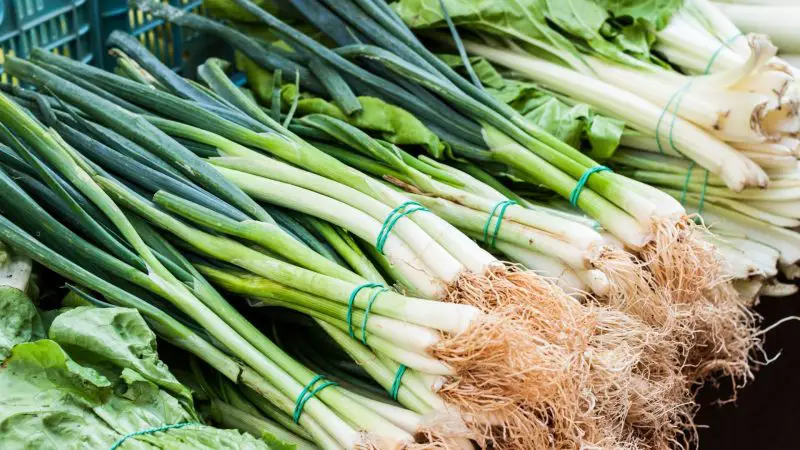
Frequently Asked Questions
Can guinea pigs eat green onions or scallions?
No. A common myth says the green leafy tops of scallions are safe even if the bulb isn’t — that’s incorrect. Both the green tops and the white bulb contain the toxic sulfur compounds, so no part of a green onion or scallion should ever be fed to a guinea pig.
Can guinea pigs eat garlic?
No. Garlic is actually the most concentrated allium and is toxic in even tiny amounts. This includes raw cloves, cooked garlic, garlic powder, wild garlic, baby (green) garlic, and dried garlic. Despite old folklore about garlic as a natural dewormer, there is no safe way to feed it to guinea pigs.
Can guinea pigs eat leeks?
No. Leeks taste milder than onions, but they are still alliums and contain the same harmful sulfides. On top of the anemia risk, leeks are especially prone to causing bloating and diarrhea in guinea pigs.
Can guinea pigs eat chives or shallots?
No. Chives are an onion-family herb and shallots are a type of onion — both carry the same organosulfur compounds and are unsafe in any quantity.
Does cooking onion or garlic make it safe?
No. Cooking, frying, drying, or powdering an allium does not remove the toxic compounds. Cooked onion, fried onion, onion/garlic powder, and seasoned leftovers are all still dangerous — and powders are often more concentrated than the fresh vegetable.
What about onion skin or a tiny accidental nibble?
Onion skin and bulb are both toxic, so skins are not a safe treat either. If your guinea pig managed only a tiny nibble and shows no symptoms, remove the food, offer hay and water, and monitor closely — but still call your vet for advice, because the dose-to-body-size ratio is high in such a small animal.
What can I give my guinea pig instead?
Stick to vetted safe vegetables such as bell peppers, leafy lettuce, cucumber, and parsley, alongside unlimited grass hay and a daily source of vitamin C. See the full safe-food list for more ideas.
The Bottom Line
Onions and every other allium — green onions, scallions, garlic, leeks, chives, and shallots — are toxic to guinea pigs and should never be fed, in any form or amount. They cause hemolytic anemia and digestive upset, and because guinea pigs can’t vomit, there’s no margin for error. Keep all onion-family foods well out of reach, and if your pet ever eats some, treat it as an emergency and call your exotic vet. For safe, vitamin-rich alternatives, build their salad around peppers, lettuce, cucumber, and herbs instead.
Related reading: What Food Can Guinea Pigs Eat? (150+ List) · Peppers · Lettuce · Cucumber