
Few pets turn heads like a long-haired guinea pig in full coat. But that flowing hair is the result of selective breeding, not self-care, so every long-haired breed is a daily grooming commitment. This guide is the chooser: it compares the five long-haired guinea pig breeds, shows how each coat actually behaves, and links you to a full profile for every one. If you are still weighing the whole family, start with our guide to guinea pig breeds, types and traits or see which breed is the largest.
Quick answer: The long-haired guinea pig breeds are the Peruvian (coat sweeps forward over the face), the Silkie/Sheltie (long hair swept straight back, no fringe), the Texel (curly ringlets), the Coronet (a Silkie with a forehead crest), plus the rare curly Alpaca and Merino. All need daily brushing and many owners keep them trimmed, so they are beautiful but not ideal for first-time keepers.
Last reviewed and updated for 2026 — breed lineup expanded into a full chooser with a comparison table and a dedicated profile for each breed, with grooming and care guidance checked against PDSA and RSPCA welfare advice.
Table of Content
Long-Haired Guinea Pig Breeds at a Glance
Use this table to match a coat to your time and experience, then tap through to each breed’s full profile for photos, history and a complete grooming routine.
| Breed | Coat & look | Grooming | Best for |
|---|---|---|---|
| Peruvian | The longest coat of all; sweeps forward over the face from rosettes on the rump | Daily brushing plus regular trims; mats the fastest | Experienced owners who enjoy styling |
| Silkie / Sheltie | Long hair swept straight back, no facial fringe, teardrop shape from above | Daily brushing; the most predictable long coat | The easiest long-hair to begin with |
| Texel | Soft curly ringlets over the whole body | Daily brushing; curls trap hay and bedding | Owners who love the “permed” look |
| Coronet | A Silkie’s swept-back coat plus a single crest (rosette) on the forehead | Daily brushing plus trims | Owners wanting a crested long-hair |
| Alpaca & Merino | Rare curly coats; the Alpaca has forward bangs, the Merino a tidy crest | Intensive daily detangling | Experienced hobbyists only |
The 5 Long-Haired Guinea Pig Breeds Explained
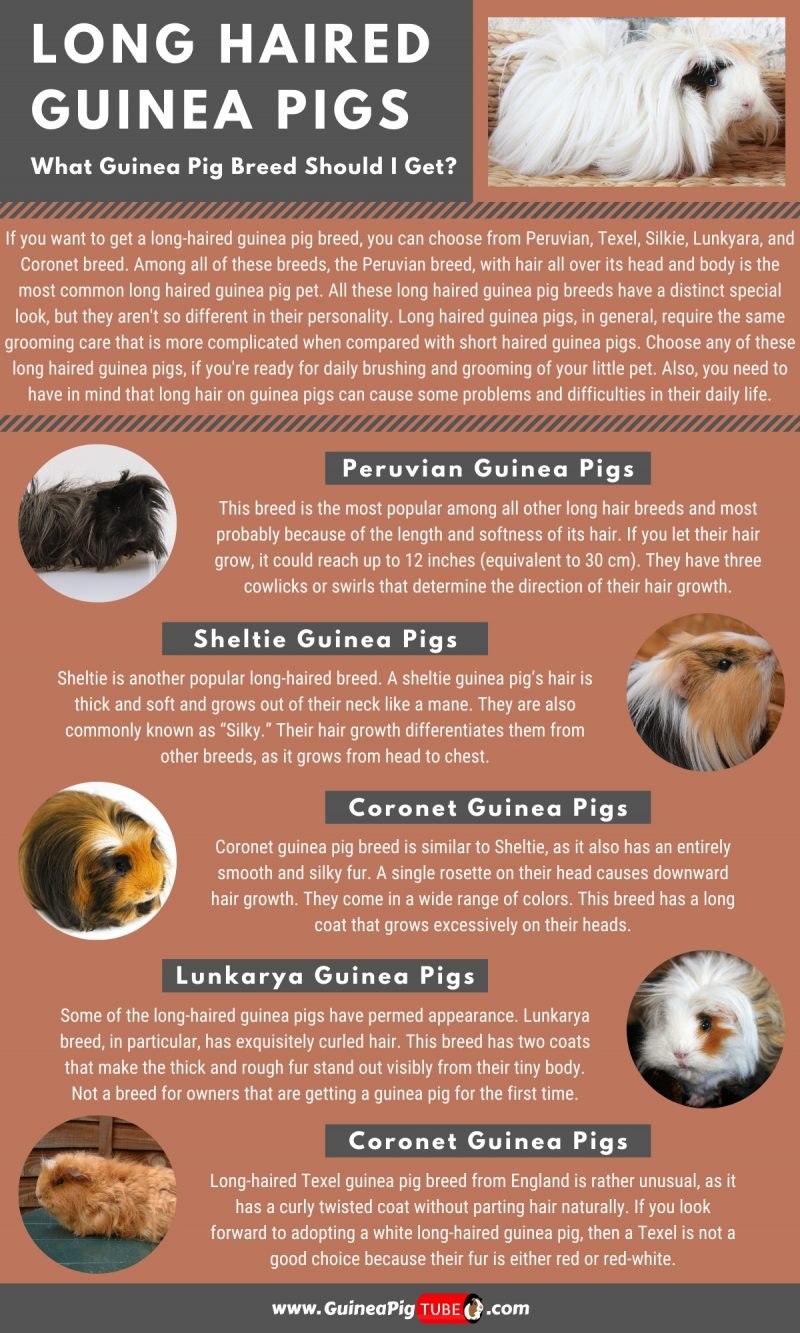
Long-haired breeds differ mainly in where the coat parts and which way it grows. That single detail decides how often the hair tangles, whether it covers the eyes, and how much trimming you will end up doing.
Peruvian Guinea Pig
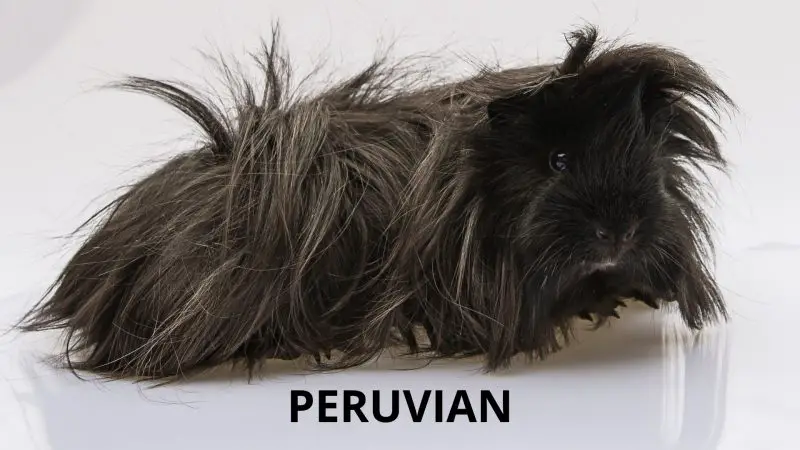
The Peruvian is the most spectacular and best known of the long-haired breeds, with the longest coat of any guinea pig — show coats can reach the floor and beyond. Rosettes on the rump push the hair forward over the face, so a mature Peruvian famously looks like it cannot tell which end is which. That forward-growing fringe needs constant attention and is the reason most pet owners keep it trimmed.
Because the coat covers the eyes and drags along the floor, Peruvians mat quickly and are not self-grooming. This is a high-maintenance breed best suited to people who genuinely enjoy daily coat care. Read the full Peruvian guinea pig profile for history, show standards and a complete routine.
Silkie (Sheltie) Guinea Pig
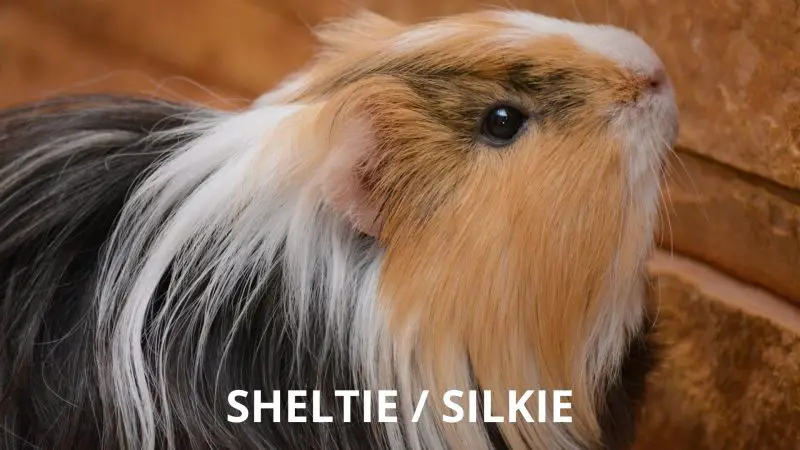
The Silkie — known as the Sheltie in the UK — has long, sleek hair that flows straight back from the head with no rosettes and no facial fringe. Viewed from above the body forms a smooth teardrop shape. Because the coat does not grow over the eyes, the Silkie is generally the most beginner-friendly long-haired breed: it still needs daily brushing, but the hair direction is predictable and easier to keep tidy.
It is a relatively modern breed and comes in a wide range of colors. If you want long-haired looks with slightly more forgiving upkeep, this is the one to read first — see the full Silkie (Sheltie) guinea pig profile.
Coronet Guinea Pig
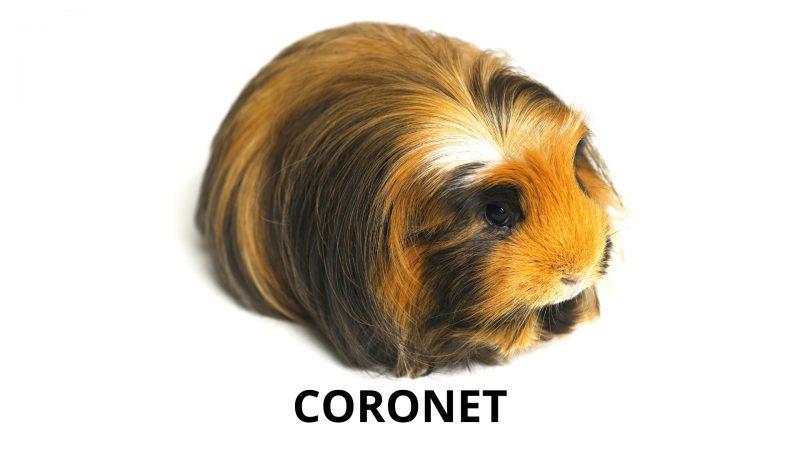
Picture a Silkie that grew a crown and you have the Coronet. The body coat is long, smooth and swept back like a Silkie’s, but a single rosette — the “coronet” or crest — sits on top of the head. It comes in a wide range of colors and, like the Silkie, the hair flows away from the eyes.
Grooming demands sit between the Silkie and the Peruvian: daily brushing of the long body coat plus a little extra care around the crest, and trims as the hair lengthens. The full Coronet guinea pig profile covers the breed in detail.
Texel Guinea Pig
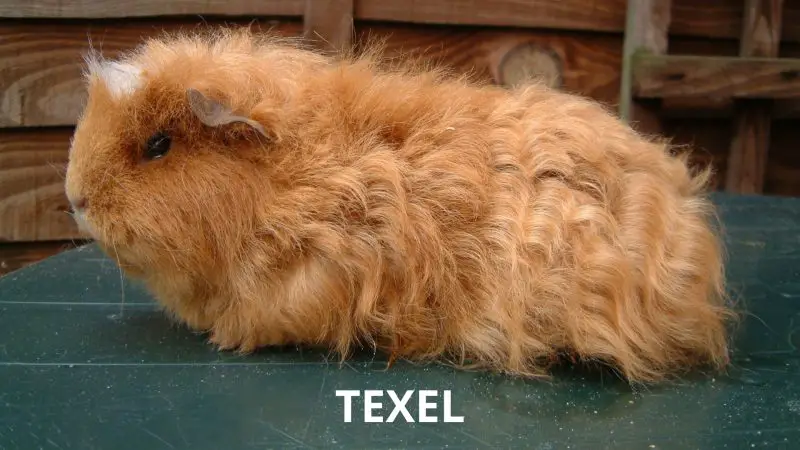
The Texel, developed in England, is the curly long-hair: instead of straight locks it grows soft ringlets all over the body, including the belly. It is essentially a curly-coated cousin of the Silkie. Texels come in the full range of guinea pig colors and markings — not just red, as is sometimes claimed.
Those gorgeous curls are also the catch: they trap hay, bedding and droppings and tangle readily, so daily brushing is non-negotiable. See the full Texel guinea pig profile before you commit to a curly coat.
Alpaca, Merino & the Rare Curly Long-Hairs
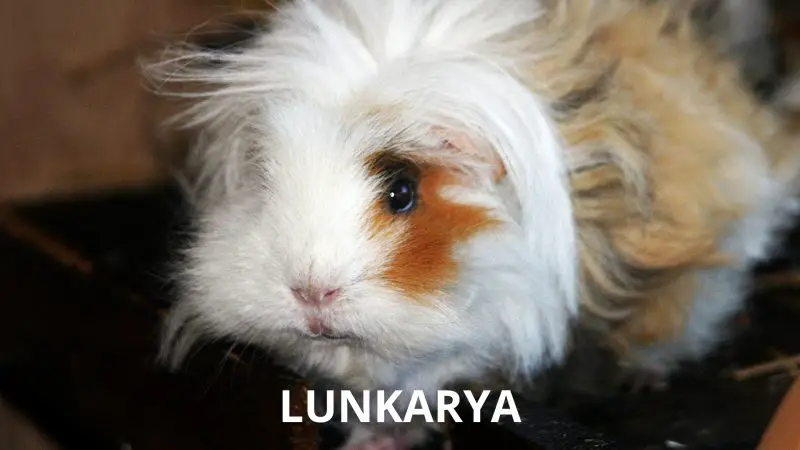
The Alpaca and Merino are the rare, curly-crested long-hairs. The Alpaca is like a curly Peruvian — a long, wavy coat with rosettes and a forward-pointing fringe of bangs. The Merino is closer to a curly Coronet, with a wavier coat that sits tighter to the body and a neat crest on the head. Both are uncommon, expensive and demand intensive daily detangling, which is why breeders recommend them for experienced keepers only. The closely related Lunkarya (“Lunkya”), a curly Swedish breed, sits in this same demanding curly-coat category.
Our growing Alpaca guinea pig profile covers these curly breeds, how to tell them apart and what their coats need.
Are Long-Haired Guinea Pigs High-Maintenance?
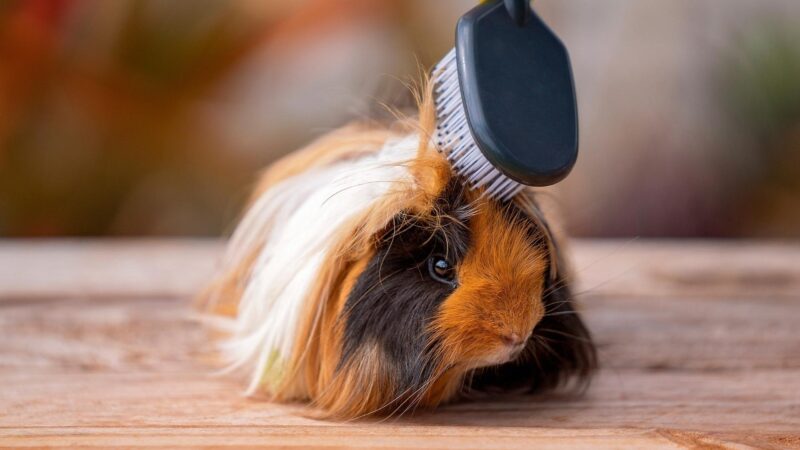
Yes — across every long-haired breed the reality is the same: daily brushing is essential, and many owners choose to keep their pig in a shorter “pet trim” for comfort and hygiene. A coat that is left a few days too long can mat to the skin, and matted hair pulls, hides skin problems and can become painful.
- Brush daily with a soft brush or wide-tooth comb, working out tangles gently from the ends inward.
- Trim the rear and belly hair to keep it clear of droppings and urine; many keepers trim the whole coat to a manageable pet length.
- Bathe only when genuinely needed, not on a schedule, using a product made for guinea pigs — see how to bathe a guinea pig and the best guinea pig shampoo.
- Keep the right tools handy — a brush, comb and small round-tipped scissors. Our guinea pig grooming kit guide covers the essentials.
Many owners find this daily routine a relaxing way to bond with a calm, handleable pet — but it has to be a routine you will actually keep up, not an occasional treat.
Coat Length Does Not Change a Guinea Pig’s Core Needs
It is easy to get lost in coats and forget that, underneath, every long-haired guinea pig has the same needs as any other cavy. The hair is cosmetic; the welfare basics are not.
- Company: guinea pigs are highly social and should live in pairs or small groups — never alone. Animal-welfare bodies such as the RSPCA and PDSA consider companionship a core need.
- Unlimited hay plus vitamin C: grass hay should make up the bulk of the diet, alongside fresh vegetables and a daily source of vitamin C, which guinea pigs cannot make themselves.
- Plenty of space: a long coat does not shrink the cage requirement. See our guinea pig cage setup guide for recommended dimensions for a pair.
- A clean, dry home: this matters even more for long-hairs, because damp or soiled bedding is what turns a coat into a health problem.
Hair and Skin Problems to Watch For
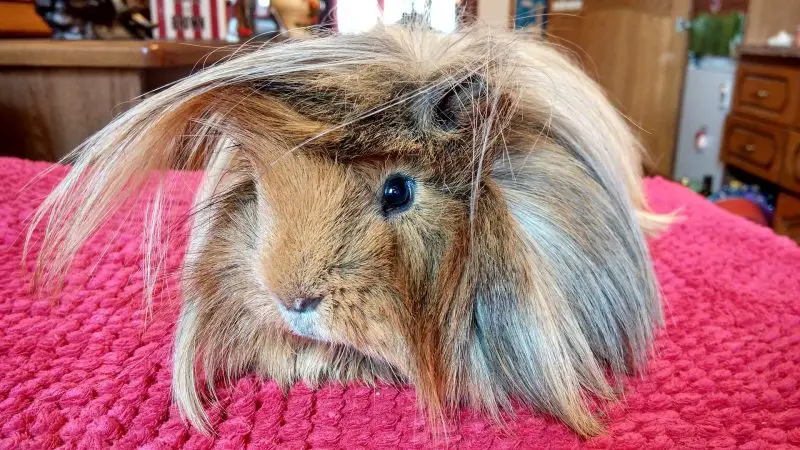
All guinea pigs shed year-round, but a neglected long coat creates extra risks:
- Matting: tangled hair tightens against the skin, causing irritation and, in severe cases, interfering with movement and feeding.
- Flystrike: a serious, potentially fatal emergency in which flies lay eggs on soiled or matted hair and the maggots feed on the skin. Keeping the rear clean and dry is the main defense.
- Mites: cause intense itching and hair loss and are easy to miss under a long coat; they are treatable, so see a vet promptly.
- Other skin issues: ringworm and fungal infections also hide beneath long hair — our guide to common skin problems in guinea pigs explains the signs.
If you ever see bald patches, scabs, crusting or constant scratching, book a vet visit — these are not things to brush off.
How to Choose the Right Long-Haired Guinea Pig
Pick by how much grooming you will realistically do, not by looks alone:
- New to long coats? Start with a Silkie/Sheltie — the swept-back hair is the most forgiving.
- Want the showstopper coat and enjoy styling? The Peruvian is the classic long-hair, but expect the most work.
- Love a crest or curls? Consider the Coronet or the curly Texel.
- Experienced and after something rare? The curly Alpaca and Merino are the most demanding of all.
If you are a first-time owner, be honest about the commitment — caring for a guinea pig is a real responsibility, and a long coat adds to it daily. Still unsure whether a long-hair fits your life? Our broader guide on what guinea pig is right for me walks through the whole decision.
Frequently Asked Questions
What is the easiest long-haired guinea pig to care for?
The Silkie (Sheltie) is generally the easiest long-haired breed to manage. Its coat is swept straight back from the face with no rosettes or fringe, so the hair grows in a predictable direction and is less prone to matting around the eyes than the Peruvian’s forward-growing coat. It still needs daily brushing.
Are long-haired guinea pigs good for beginners?
Usually not. Long-haired breeds need daily brushing and regular trimming, and their coats can mat or hide skin problems if grooming is missed. A first-time owner is often better served by a short-haired breed; if you really want a long-hair, the Silkie is the most forgiving starting point.
How often do long-haired guinea pigs need grooming?
Daily. Long coats should be brushed every day to prevent tangles and mats, with the rear and belly trimmed regularly to keep them clean. Many owners keep the whole coat in a shorter pet trim, which cuts the daily workload while keeping the pig comfortable.
Can you cut a long-haired guinea pig’s hair?
Yes. Trimming is completely fine and is recommended for pet guinea pigs that are not being shown. Use small, round-tipped scissors, keep the hair off the floor and away from the eyes and rear, and trim a little at a time. Only show pigs are kept in full coat.
What is the rarest long-haired guinea pig breed?
The curly-coated breeds are the rarest and hardest to find. The Alpaca and Merino, along with the Swedish Lunkarya, are uncommon, expensive and high-maintenance, so they are recommended mainly for experienced keepers rather than first-time owners.
Does a long coat change what a guinea pig needs?
No. Coat length only affects grooming. Every long-haired guinea pig still needs a companion, unlimited hay plus a daily source of vitamin C, fresh vegetables, and a large, clean cage. The hair is cosmetic; the core welfare needs are the same as for any guinea pig.
Related Guinea Pig Guides
- Guinea Pig Breeds: Types, Traits and Breed Information
- Peruvian Guinea Pig
- Silkie (Sheltie) Guinea Pig
- Coronet Guinea Pig
- Texel Guinea Pig
- Alpaca Guinea Pig
- What Guinea Pig Is Right for Me?
List of Sources
PDSA — Guinea Pig Care and Welfare
RSPCA — Guinea Pig Welfare Needs
MSD Veterinary Manual — Routine Health Care of Guinea Pigs