
There are countless herbs you can grow in the garden or pick up at the shop, and most of the leafy culinary ones are a lovely way to add variety, flavour and a vitamin boost to your guinea pig’s veg bowl. But “herb” covers everything from gentle, vitamin-C-rich leaves your pig can enjoy most days to strong, aromatic herbs that should only be a tiny nibble — and a couple, like ginger and chives, that are best kept off the menu entirely. This guide walks through the popular herbs one by one so you know exactly which are safe, how often, and how much.
Quick Answer: Can Guinea Pigs Eat Herbs?
Yes — guinea pigs can eat most common culinary herbs, and they make a healthy, flavourful addition to the daily veg bowl. The best choices are gentle, vitamin-C-rich leafy herbs like cilantro (coriander), dill and parsley. Stronger, very aromatic herbs — oregano, rosemary, thyme, basil and mint — are safe too, but only in tiny amounts now and then because they are high in calcium. Cilantro is the standout: popular, well-tolerated and fine in small amounts most days. The main one to skip is ginger, a spicy, pungent root that can irritate a guinea pig’s mouth and stomach. Always feed herbs raw, fresh and well-washed, and treat them as a supplement to unlimited hay — never a main food.
Herbs are a “little and often” food: they bring real nutrients but most are higher in calcium than a guinea pig needs, so portion control matters. Here is an at-a-glance table of the most common herbs, followed by a full per-herb guide.
Table of Content
Safe Herbs for Guinea Pigs at a Glance
| Herb | Safe? | How often | Notes |
|---|---|---|---|
| Cilantro (coriander) | ✅ Yes | Small amount, most days | One of the safest, best-loved herbs. Good vitamin C & K, relatively low calcium. |
| Dill | ✅ Yes | 2–3× a week | Aromatic and vitamin-C rich. Moderate calcium & phosphorus, so don’t overdo it. |
| Parsley | ✅ In moderation | ~2× a week | Tasty and very high in vitamin C, but high calcium & oxalic acid. See full guide. |
| Basil | ✅ In moderation | A few times a week | Leaves and stems are safe; low vitamin C and fairly high calcium. See full guide. |
| Mint | ✅ Sparingly | 1–2× a week, a few small leaves | High calcium, little vitamin C; some pigs love it, others ignore it. See full guide. |
| Thyme | ✅ Sparingly | One small sprig every week or two | Tough, very aromatic; high in vitamin C but also calcium. Tiny amounts only. |
| Oregano | ✅ Sparingly | A few tiny leaves a week | Strong aroma and very high calcium; many guinea pigs dislike it anyway. |
| Rosemary | ✅ Sparingly | Up to ~2× a week, a tiny amount | Highly aromatic and very high in calcium (≈317 mg/100 g). A little only. |
| Ginger | ❌ Best avoided | — | A spicy, pungent root that irritates the mouth and stomach and is very low in vitamin C. |
Are Herbs Good for Guinea Pigs? | Health Benefits
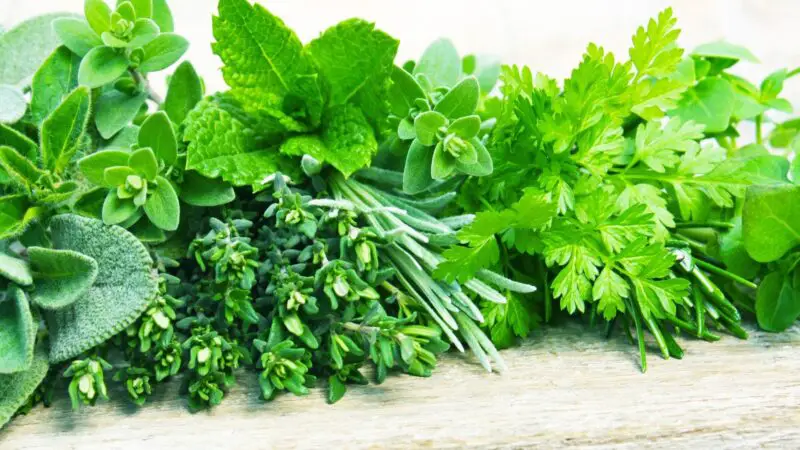
Leafy culinary herbs generally contain useful amounts of vitamins A, C and K, along with iron, magnesium, phosphorus, potassium and (often a lot of) calcium. Used in the right small portions, they bring several real benefits:
- Vitamin C & scurvy prevention. Guinea pigs can’t make or store their own vitamin C and need roughly 10–30 mg a day (more for babies and pregnant sows). Without it they develop scurvy — signalled by low energy, loss of appetite, a rough coat, internal bleeding, weight loss and diarrhoea. Vitamin-C-rich herbs like cilantro, dill, parsley and thyme help top up the daily total.
- Antioxidants & immunity. Herbs are rich in antioxidants (vitamin A, beta-carotene, manganese) that mop up free radicals and support a strong immune system.
- Vitamin K & healthy blood. Vitamin K supports blood clotting and bone health, while iron and copper help keep the blood strong and guard against anaemia.
- Fibre & gentle digestion. Fresh herbs add a little fibre to keep the gut moving, and most are very low in calories and fat.
- Variety & enrichment. Different scents and flavours make mealtimes more interesting, which encourages natural foraging behaviour.
Can Herbs Be Bad for Guinea Pigs? | Possible Risks
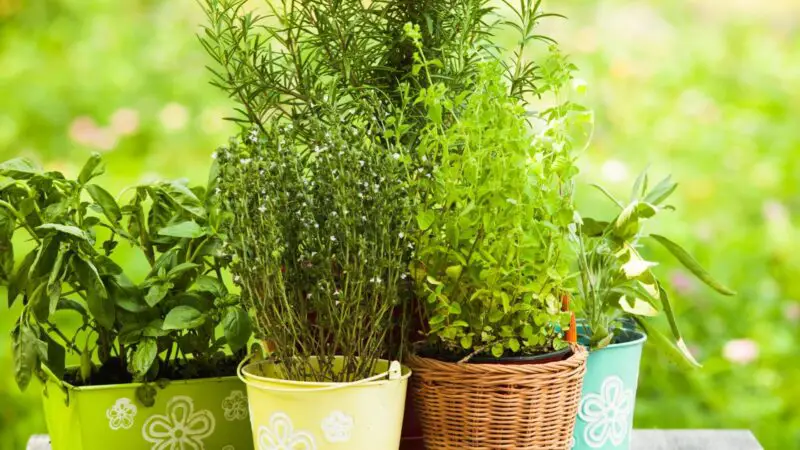
- Too much calcium → bladder & kidney stones. This is the big one. Adult guinea pigs only need a little calcium, and many herbs — especially rosemary, oregano, parsley and basil — are loaded with it. Over time, excess calcium can cause bladder sludge or stones, painful urination, blood in the urine and urinary infections. Keep aromatic, high-calcium herbs to tiny, occasional amounts.
- Oxalic acid. Some herbs (parsley, cilantro) also contain oxalic acid, which can compound the stone risk when fed too freely.
- Digestive upset. Herbs are rich and fibrous; too much can cause bloating, gas, soft stool or diarrhoea in a small, sensitive gut.
- Strong flavours and fussy pigs. Very aromatic herbs (oregano, rosemary) put some guinea pigs off entirely — never force them.
- Pregnancy caution. A few herbs (parsley, cilantro) are best limited for pregnant sows; check with your vet.
- Always raw & washed. Only ever feed fresh, raw, well-rinsed herbs — never dried, cooked or seasoned versions, which lose nutrients and may carry salt or additives.
Can Guinea Pigs Eat Cilantro (Coriander)?
Yes — cilantro is one of the best and safest herbs for guinea pigs, and most pigs absolutely love it. Also called coriander or Chinese parsley, it’s confirmed by many vets as one of the safest herbs a guinea pig can eat, with a nicely balanced nutritional profile. It’s very low in fat, high in fibre and rich in vitamins K and A, with a useful (if modest) dose of vitamin C — around 27 mg per 100 g — plus antioxidants and manganese to help the body absorb calcium. Crucially, it’s lower in calcium than the strong aromatic herbs, which is why it can feature more often.
The whole leaf, stem and flower are safe (slice tougher stems into small pieces); only skip the woody roots, which offer nothing. Because pigs enjoy it so much, you can offer a small amount almost every day — about 10–20 tiny sprigs for an adult, as part of the daily cup of leafy greens. Introduce it gradually and watch for any loose stool the first time. Overfeeding can cause indigestion, diarrhoea or dehydration, and pregnant sows are best given only a little.
Can Guinea Pigs Eat Dill?
Yes — guinea pigs can eat dill in moderation, and its strong aroma makes it a favourite for many. Dill is a good source of vitamin C, along with vitamin A, iron, folate, manganese and potassium — a nice all-round vitamin top-up. The catch is its calcium and phosphorus content, plus a fair amount of fibre, so it’s a “few times a week” herb rather than a daily one.
Feed a few small fronds or branches up to 2–3 times a week. Introduce it slowly, and cut back if you notice bloating, gas or soft stool (signs of too much fibre or calcium). As always, fresh and raw only — never dried dill weed from the spice rack.
Can Guinea Pigs Eat Oregano?
Only in very small amounts, and don’t be surprised if your pig isn’t keen. Oregano isn’t toxic and even has some antibacterial and antioxidant properties, but it is extremely high in calcium, which makes it a genuine stone risk if fed regularly. It’s also intensely aromatic, so many guinea pigs simply turn their noses up at it.
If your pig does enjoy it, offer no more than a few tiny leaves once a week, ideally mixed in with low-calcium veg. Stop immediately if you see any sign of an allergic reaction (vomiting, diarrhoea or loss of appetite) and see a vet if symptoms persist.
Can Guinea Pigs Eat Rosemary?
Yes, but only a tiny amount — rosemary is one of the highest-calcium herbs of all. It’s not poisonous and carries useful vitamins A and C plus iron, but with around 317 mg of calcium per 100 g it has to be strictly rationed. Funnily enough, many guinea pigs go a little crazy for its scent and will happily devour it — which is exactly why you have to be the one setting the limit.
Keep rosemary to a small amount no more than about twice a week. Too much of this calcium-rich herb risks urinary complications — blood in the urine, painful urination, infections and bladder or kidney stones — so treat it as an occasional aromatic nibble, not a staple.
Can Guinea Pigs Eat Thyme?
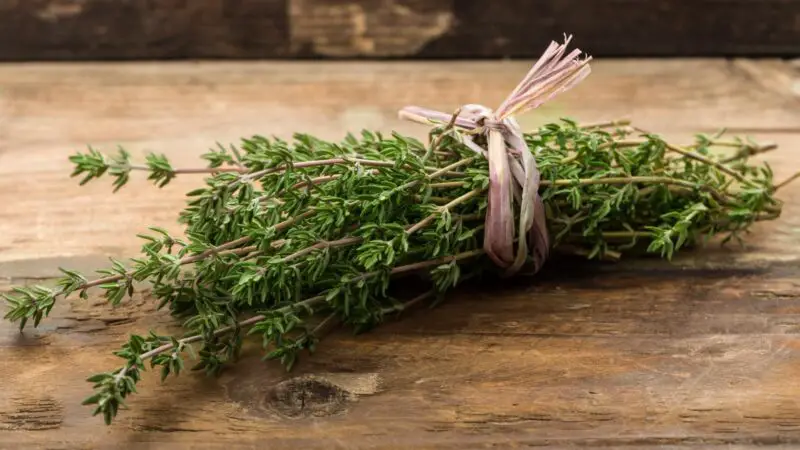
Yes — thyme is very nutritious and surprisingly high in vitamin C, but it’s a tough, calcium-containing herb, so feed it sparingly. It’s low in calories, carbs and fat, with a little fibre for digestion, plus vitamin A, iron and manganese. The standout is its vitamin C (around 75% of a human’s daily value per ounce of fresh thyme), which is great for scurvy prevention.
Because it also contains calcium and is quite a “woody” herb, keep portions tiny: no more than one small sprig every week or two. Most pigs enjoy its aroma, but a little goes a long way.
Can Guinea Pigs Eat Basil?
Yes — guinea pigs can eat basil in moderation, leaves and stems and all. It’s a safe, aromatic herb most pigs enjoy, but it’s low in vitamin C and fairly high in calcium, so it shouldn’t make up a big part of the diet. Offer a few leaves a few times a week, mixed with lower-calcium veg.
For full serving sizes, benefits and the different basil varieties, see our dedicated guide: Can Guinea Pigs Eat Basil?
Can Guinea Pigs Eat Mint?
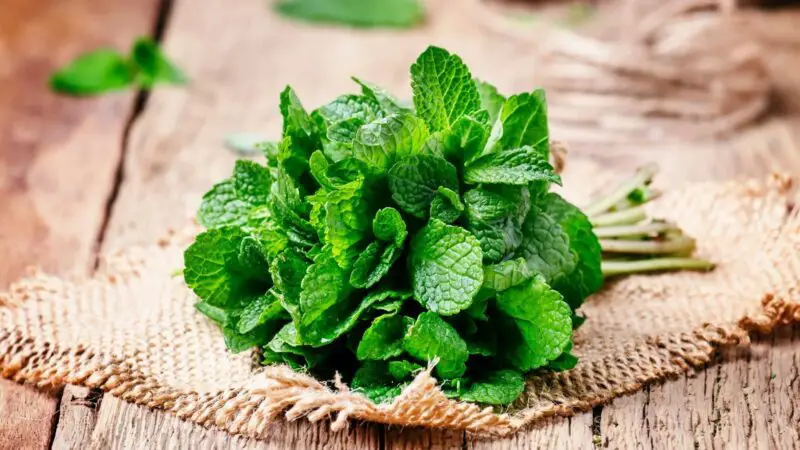
Yes — guinea pigs can safely eat mint, but only sparingly. Mint is high in calcium and has little to no vitamin C, so it’s an occasional treat rather than a regular green. Stick to a maximum of a few tiny leaves once or twice a week, mixed in with a variety of low-calcium veg. Some pigs love it; others aren’t fussed — both are normal.
For the full breakdown (including which mint varieties are fine), read our dedicated guide: Can Guinea Pigs Eat Mint?
Can Guinea Pigs Eat Parsley?
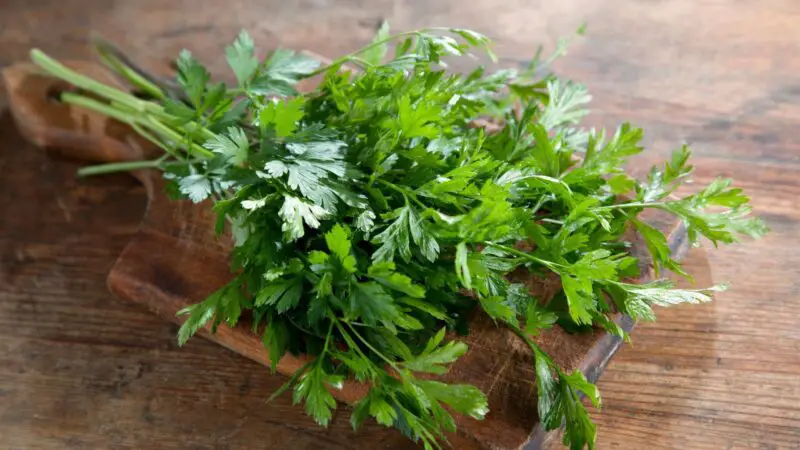
Yes — parsley is a tasty, vitamin-C-packed herb most guinea pigs adore, but it’s high in calcium and oxalic acid, so it needs careful rationing. A few stems about twice a week is plenty — think 5–10 small sprigs, and never more than 6–9 tiny stems in one serving. This applies to flat-leaf (Italian) parsley, curly parsley and parsley root alike; they’re all the same herb with the same calcium caution. Feed it fresh and raw, never dried “parsley flakes.”
Because parsley packs both high vitamin C and high calcium, it earns its own detailed page — including baby and pregnant-sow advice and every part of the plant: Can Guinea Pigs Eat Parsley?
⚠️ Can Guinea Pigs Eat Ginger? (Best Avoided)
It’s best to leave ginger out of your guinea pig’s diet. Ginger is a spicy root rather than a leafy herb, and raw ginger’s hot, bitter, pungent flavour is simply too strong for a guinea pig. It’s not classed as toxic, but it commonly causes mouth irritation, burning, heartburn, bloating, gas and diarrhoea, and there are reports that high doses can aggravate the heart and increase bleeding risk. On top of that its vitamin C content is very low (around 5 mg/100 g) while its calcium adds to the usual urinary-stone concern.
Ginger greens (the leaves) are milder but still spicy and bitter enough to cause an upset stomach, so skip those too. There are far better, gentler herbs on this list — cilantro and dill are great places to start instead.
Which Herbs Are Dangerous for Guinea Pigs?
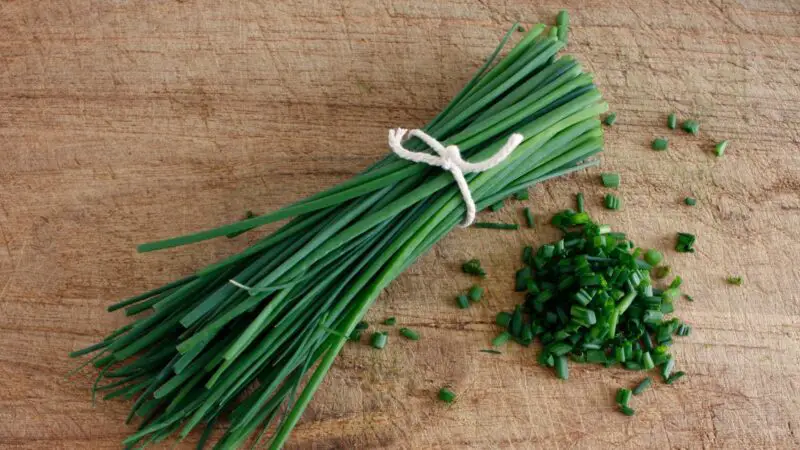
Most culinary herbs are fine in the right amounts, but a few should be avoided altogether — either because they’re genuinely harmful or because they’re far too high in calcium, oxalic acid or other compounds for regular feeding:
- Chives — never. Like onions, garlic and leeks, chives belong to the allium family and contain disulfides that can damage a guinea pig’s red blood cells. The harm can build up slowly, which makes them especially dangerous.
- Ginger — best avoided (see above): too spicy and pungent.
- Sage, marjoram, tarragon — avoid. Very strong, aromatic and high in calcium and oxalic acid, with little benefit.
- Chamomile — not recommended as a fed herb for everyday diets.
If you ever spot an ingredient you’re unsure about, leave it out and check it first — it’s always safer to skip a questionable plant than to risk it.
How to Feed Herbs Safely (and a Healthy Diet Overview)
- Wash everything. Rinse herbs well under running water to remove pesticides, dirt and pests.
- Fresh and raw only. Never feed dried, cooked or seasoned herbs — cooking destroys nutrients and dried/spice-rack versions are concentrated in calcium and may contain salt or additives.
- Introduce one at a time. Offer a small amount of a new herb and watch for 12–24 hours for any soft stool or fussiness before making it a regular.
- Rotate and mix. Combine a small amount of herb with a variety of lower-calcium veg rather than serving a big pile of one strong herb.
- Mind the calcium. Keep the very aromatic, high-calcium herbs (rosemary, oregano, basil, parsley) to small, occasional servings.
Herbs are only one small part of the picture. A healthy guinea pig diet is built on unlimited grass hay (about 80% of what they eat), a daily cup or so of fresh leafy greens and veg, a small measured portion of pellets (around an eighth of a cup), and constant access to fresh water. Herbs, like fruit, are a supplement to that — a flavourful, vitamin-rich extra, not a meal in themselves.
Related Guinea Pig Food Guides
Herbs are just one slice of a varied veg bowl. For the complete picture, see our complete list of foods guinea pigs can and can’t eat (150+ types). You might also like:
- Can guinea pigs eat parsley? — the full high-vitamin-C, high-calcium herb guide.
- Can guinea pigs eat lettuce? — everyday salad leaves and which ones to pick.
- Can guinea pigs eat cucumber? — a hydrating, low-calcium daily favourite.
- Can guinea pigs eat onions? — why alliums (and chives) are off-limits.
Frequently Asked Questions
What is the safest herb for guinea pigs?
Cilantro (coriander) is widely considered the safest and most popular herb. It’s well-tolerated, lower in calcium than the strong aromatic herbs, and gives a useful vitamin C and K boost, so a small amount can be offered most days. Dill is another gentle, vitamin-C-rich choice.
Can guinea pigs eat fresh herbs every day?
Only the gentle, lower-calcium ones like cilantro can be offered in a small amount most days. Strong, high-calcium herbs — rosemary, oregano, thyme, basil, mint and parsley — should only be a tiny nibble a few times a week to avoid the risk of bladder and kidney stones.
Why is ginger bad for guinea pigs?
Ginger is a spicy, pungent root whose hot, bitter flavour irritates a guinea pig’s mouth and stomach, often causing burning, bloating, gas or diarrhoea. It’s also very low in vitamin C. It isn’t strictly toxic, but it’s best left out of the diet entirely — including the milder ginger leaves.
Which herbs should guinea pigs never eat?
Avoid chives (and all alliums like onion, garlic and leeks), which can damage red blood cells. Also skip ginger, sage, marjoram, tarragon and chamomile — they’re either too pungent or too high in calcium and oxalic acid for safe regular feeding.
Can guinea pigs eat dried herbs?
No. Only feed fresh, raw, washed herbs. Dried, cooked or spice-rack herbs lose much of their nutrition, are far more concentrated in calcium, and may contain salt or additives that aren’t safe for guinea pigs.
We’ve also made a full list of foods that guinea pigs can and can’t eat (150+ Types of Foods). Be sure to also check our recommended products page for everything you’ll need to keep your guinea pigs happy and healthy. Hope this helped you find the answer you were looking for!
Related Guinea Pig Guides
List of Sources
RSPCA — What To Feed a Guinea Pig
Vitamin C Requirements of the Guinea-Pig
USDA FoodData Central — Herb Nutrient Data
Nutrient Requirements of Laboratory Animals: Fourth Revised Edition