
Quick Answer: Can Guinea Pigs Eat Lettuce?
Yes — guinea pigs can eat most lettuces and salad leaves, and they love them. The best everyday choice is romaine (cos): it has the most vitamin C and relatively little calcium. Stick to 1–2 leaves of a leafy variety per pig, and rotate higher-calcium leaves like arugula (rocket), watercress, lamb’s lettuce and endive only a few times a week. The one to skip is iceberg lettuce — it is mostly water with almost no nutrition and can cause diarrhea. Always serve it raw, fresh and well washed, never cooked, and always alongside unlimited hay.
I feed my own guinea pigs a leaf or two of fresh lettuce most days, and salad leaves are one of the easiest, safest fresh foods you can offer — as long as you pick the right type and keep the portion sensible. Below is a quick comparison of every salad leaf, followed by a short guide to each one.
Table of Content
Lettuce & Salad Leaves at a Glance
| Leaf type | Safe? | How often | Key notes |
|---|---|---|---|
| Romaine / Cos | ✅ Best choice | Daily – small amount, or most days | Highest vitamin C, lower calcium, low calorie. The go-to staple leaf. |
| Little gem | ✅ Yes | A few times a week | Mini romaine; sweet, crunchy, some calcium — moderate it. |
| Green leaf | ✅ Yes | A few times a week | Nutritious but fairly high calcium. |
| Red leaf | ✅ Yes | A few times a week | A little less vitamin C; calcium similar to romaine. |
| Butter / Butterhead | ✅ Yes | About once a week | Soft and well-liked; more calcium, less vitamin C. |
| Lamb’s lettuce (mâche) | ✅ Yes | A few times a week | Tasty and mineral-rich; calcium means moderation. |
| Endive | ✅ Yes | 2–3 times a week | A chicory, not a true lettuce; higher calcium & sodium. |
| Arugula (rocket) | ✅ Yes, sparingly | 1–3 times a week | Peppery; highest calcium of the group — smallest portions. |
| Watercress | ✅ Yes, sparingly | 2–3 times a week | Very nutrient-dense, high vitamin C & vitamin K, but high calcium. |
| Iceberg | ❌ Avoid | Don’t feed | Mostly water, almost no nutrients, can cause diarrhea. Not toxic, just pointless. |
Is Lettuce Good for Guinea Pigs? | Health Benefits
Leafy lettuces are a genuinely good fresh food for guinea pigs. The benefits include:
- Vitamin C. Guinea pigs cannot make or store vitamin C and must get it from food — without enough they develop scurvy. Leafier lettuces (especially romaine) help top this up.
- Hydration. The high water content helps keep your pig hydrated, particularly in summer. (It never replaces a full water bottle, though.)
- Digestion. Dietary fiber supports a healthy gut and helps prevent constipation and upset stomach.
- Heart & muscle health. Potassium supports muscle and heart function; folate and vitamins A and C support cardiovascular health.
- Eye health & antioxidants. Vitamin A and antioxidants help vision and mop up free radicals, which supports overall health.
- Healthy weight. Most lettuces are very low in calories and fat, so they make a satisfying, non-fattening treat.
Nutrition Facts of Lettuce
Lettuce and salad leaves provide a useful mix of nutrients for guinea pigs:
- Vitamin C – the key one for guinea pigs (they can’t produce it themselves).
- Vitamin A & beta-carotene – antioxidants that support eyesight and immunity.
- Vitamin K – supports blood clotting and bone health.
- Potassium & magnesium – for muscle, nerve and heart function.
- Folate – supports heart health.
- Dietary fiber – supports digestion.
- Calcium – needed in small amounts, but the nutrient to watch (see risks below). Calcium content is exactly what separates an everyday leaf like romaine from a “few-times-a-week” leaf like arugula.
Is Lettuce Bad for Guinea Pigs? | Possible Risks
- Excess calcium → bladder & kidney stones. This is the main risk. Too much calcium builds up in the urinary tract and can cause painful urination, blood in the urine, urinary infections, and eventually bladder or kidney stones. This is why higher-calcium leaves (arugula, watercress, lamb’s lettuce, endive) are limited to a few times a week. If you ever see blood in the urine or straining, see a vet promptly.
- Too much at once → bloating & diarrhea. Any sudden or large amount of watery leaf can cause soft stools, gas or diarrhea. Introduce new leaves slowly and keep portions small.
- Pesticides & heavy metals. Some lettuce can carry pesticide residue, and certain strains absorb heavy metals from the soil. Buy from a good source (organic if you can) and always wash leaves thoroughly before feeding.
- Iceberg specifically. It isn’t toxic, but it’s mostly water with very little nutrition and is the most likely lettuce to cause diarrhea — there’s simply no reason to feed it.
Serving Size & Frequency
A sensible serving is one to two medium leaves per guinea pig. Lower-calcium leaves like romaine can be offered most days; higher-calcium leaves like arugula and watercress should stay at a few times a week. Always rotate leaves and mix them with other fresh veg so your pig gets variety and a balanced calcium intake — never feed a huge bowl of any single leaf in one go.
Remember that fresh leaves are a supplement, not the main meal. Unlimited grass hay should make up about 80% of the diet, with a small daily portion of pellets and roughly a cup of mixed fresh veg per pig per day.
A Guide to Each Lettuce & Salad Leaf
Romaine (Cos) Lettuce — the Best Choice
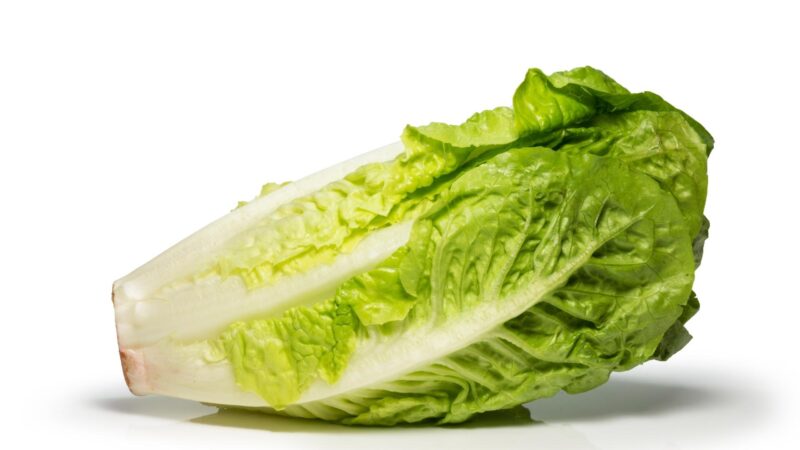
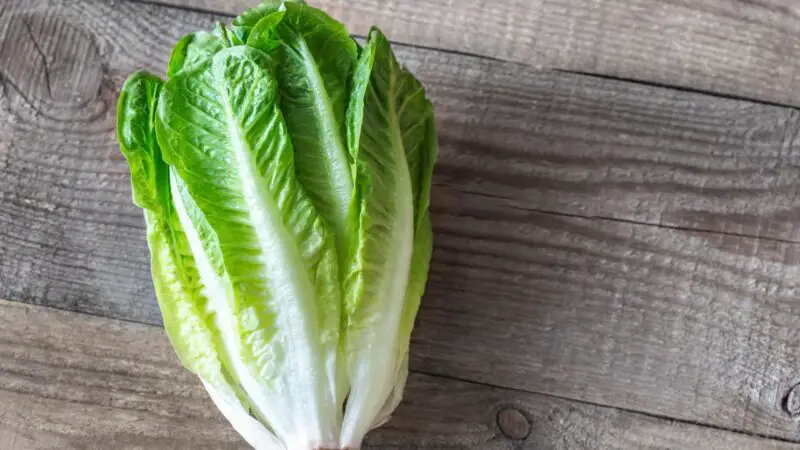
Romaine lettuce is the best lettuce for guinea pigs. It’s crunchy, low in calories, and has the most vitamin C of the common lettuces while staying relatively low in calcium — the ideal balance. That low-calcium, high-vitamin-C profile is why it can be an everyday leaf rather than an occasional one. It also delivers fiber for digestion, potassium for the heart, plus vitamins A and K. You can offer one to two leaves up to several times a week. Even so, vary it with other greens rather than relying on romaine alone.
Little Gem Lettuce
Guinea pigs can eat little gem lettuce. It’s essentially a mini romaine — about half the size, with a sweet, buttery, crunchy bite (its other name, “sucrine,” means “sugar” in French). It offers vitamin C, vitamin A, potassium and is low in calories and fat, so it’s good for a healthy weight. It does contain some calcium, so feed a small handful a few times a week rather than daily. As a rule of thumb, the darker the leaf, the more nutrients it carries.
Lamb’s Lettuce (Mâche / Corn Salad)
Guinea pigs can eat lamb’s lettuce in moderation. Also called mâche, corn salad or field lettuce, it has a mild, nutty flavour and most pigs gobble it up. It’s rich in vitamins A, C and B6, plus potassium, iron and magnesium — good for blood, immunity and bones. The catch is calcium, so keep it to a few times a week and mix it with lower-calcium leaves. Many owners offer a tiny amount more often; that’s fine as long as portions stay small.
Endive (and Curly, Belgian & Escarole)
Guinea pigs can eat endive in moderation. Technically a chicory rather than a true lettuce, endive is a slightly bitter salad leaf that’s low in calories and rich in vitamins C, A and K plus antioxidants and beta-carotene. Because it’s higher in calcium and sodium, offer just a few leaves 2–3 times a week. The main varieties are all fine in the same moderate way:
- Curly endive (frisée/chicory endive) – narrow curly leaves; tends to be higher in calcium and sodium, so feed only occasionally.
- Belgian endive – smooth white-and-yellow leaves, slightly bitter; rich in vitamins C, A and K — in small amounts, not daily.
- Escarole (Bavarian endive) – broad, paler, less bitter leaves; about twice a week.
Arugula (Rocket / Rucola)
Guinea pigs can eat arugula, but sparingly. Arugula — also called rocket or rucola — is a peppery green from the mustard family that’s packed with vitamin C, vitamin A, vitamin K, iron, potassium and magnesium. The important caveat: it’s the highest-calcium leaf in this guide, so it’s the one to feed most carefully — just a couple of leaves one to three times a week. Some pigs love its spicy taste and others find it too strong; mixing it with milder leaves like romaine helps. Baby arugula (harvested young) and arugula sprouts are milder and also fine in the same small, moderate amounts.
Watercress
Guinea pigs can eat watercress in moderation. It’s one of the most nutrient-dense leaves around — very high in vitamin C and vitamin K, with vitamin A, antioxidants and a high water content that helps with summer hydration. Like arugula it’s a cruciferous leaf and is fairly high in calcium, so offer a small handful around 2–3 times a week rather than a big bowl. Too much at once can cause bloating or a slightly upset tummy, so start small and watch how your pig responds.
Iceberg Lettuce — Best Avoided
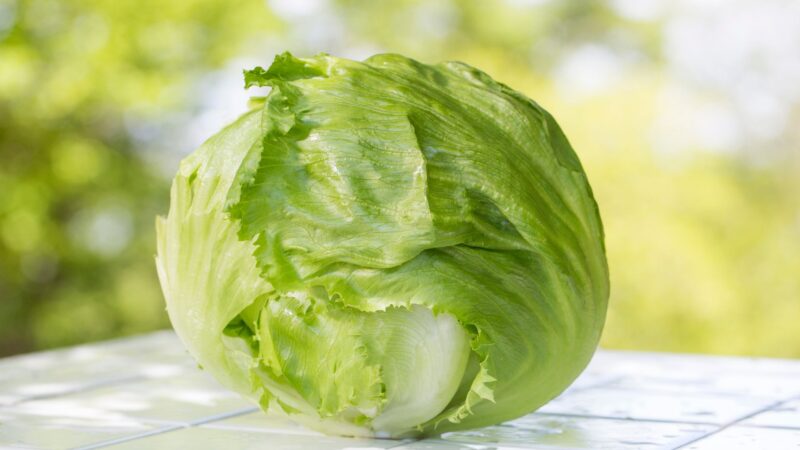
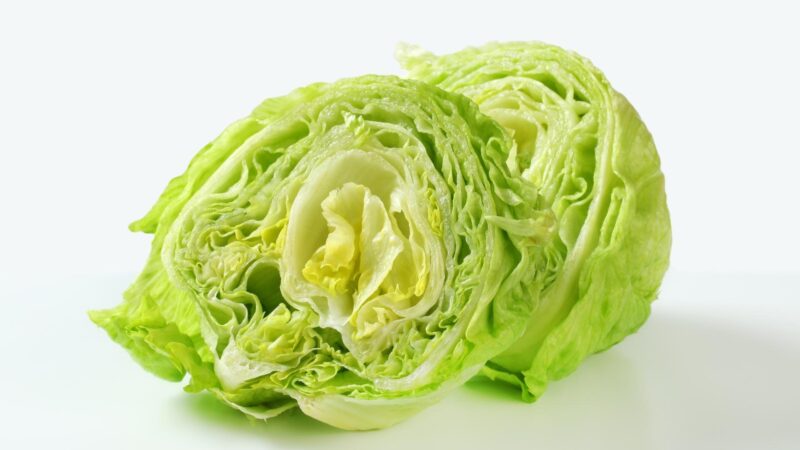
Skip iceberg lettuce. It has an extremely low nutritional content and a very high water and sugar content, which makes it the lettuce most likely to cause diarrhea. It isn’t poisonous — so don’t panic if a stray bit gets eaten — but there’s no reason to feed it when better leaves exist.
Green Leaf, Red Leaf & Butter Lettuce
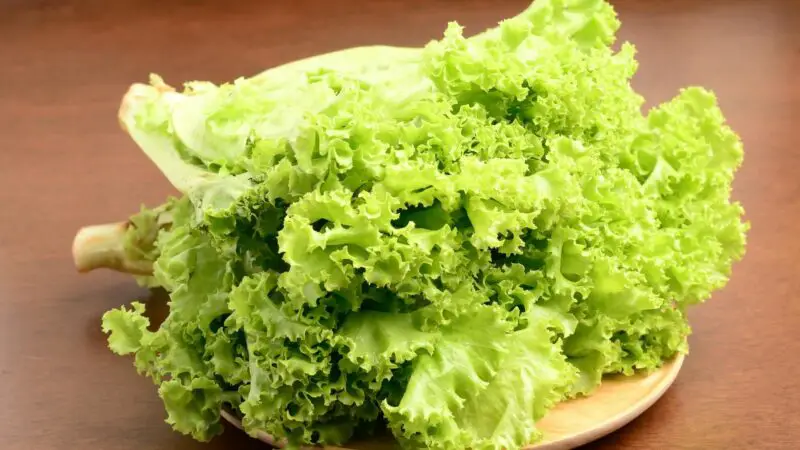
Green leaf lettuce is a reasonably nutritious choice — not as good as romaine but far better than iceberg; its main downside is a fairly high calcium level, so a few times a week. Red leaf lettuce has a bit less vitamin C but calcium levels similar to romaine. Butter (butterhead) lettuce is soft, well-liked and not harmful, but it’s higher in calcium and lower in vitamin C, so most owners treat their pigs to it about once a week.
Lettuce Stalks & Cooked Lettuce
Avoid thick lettuce stalks — they’re hard and can be a choking risk; stick to fresh leaves. And never cook lettuce. Guinea pigs only eat raw, fresh food, and cooking destroys the very vitamins (especially vitamin C) that make lettuce worth feeding. Always serve it raw, fresh and washed.
Related Guinea Pig Food Guides
Lettuce is just one piece of the salad bowl. For the full picture, see our complete list of foods guinea pigs can and can’t eat (150+ types). You might also like these popular fresh-food guides:
- Can guinea pigs eat cucumber? — a hydrating everyday favourite.
- Can guinea pigs eat spinach? — nutritious, but another high-calcium leaf to limit.
- Can guinea pigs eat broccoli? — a vitamin-C powerhouse.
Frequently Asked Questions
What is the best lettuce for guinea pigs?
Romaine (cos) lettuce is the best all-round choice. It has the highest vitamin C and relatively low calcium, so it’s safe to feed in small amounts most days.
Can guinea pigs eat lettuce every day?
You can offer a small amount of a low-calcium leaf like romaine most days. Higher-calcium leaves — arugula, watercress, lamb’s lettuce, endive, butter and green leaf — should be limited to a few times a week to protect against bladder stones.
Why is iceberg lettuce bad for guinea pigs?
Iceberg is mostly water with almost no nutrients, and its high water content can cause diarrhea. It isn’t toxic, but it offers nothing useful, so it’s best avoided in favour of leafier lettuces.
How much lettuce should I feed my guinea pig?
One to two medium leaves per pig is plenty. Lettuce is a supplement to unlimited hay (about 80% of the diet) and a small daily serving of mixed fresh veg, not a meal on its own.
Can guinea pigs eat arugula and watercress?
Yes, both in moderation. They’re nutritious and rich in vitamin C, but they’re also high in calcium, so feed only small amounts a few times a week and mix them with milder, lower-calcium leaves.
Quick Facts on Lettuce
- Lettuce was first cultivated in ancient Egypt around 6,000 years ago.
- Ancient Greeks and Romans believed lettuce could induce sleep.
- Iceberg is the most commonly grown and sold strain in the USA — ironically the least useful for guinea pigs.
- Little gem is a cross between romaine and butterhead lettuce.
- Lamb’s lettuce isn’t a true lettuce at all — it’s a separate plant that originally grew as a weed in European cornfields (hence “corn salad”).
- Arugula and watercress both belong to the mustard family, which is why they taste peppery.
- Lettuce can be grown hydroponically in water or directly in soil and reaches 6–12 inches tall.
We’ve also made a full list of foods that guinea pigs can and can’t eat (150+ Types of Foods). Be sure to also check our recommended products page for everything you’ll need to keep your guinea pigs happy and healthy. Hope this helped you find the answer you were looking for!
Related Guinea Pig Guides
List of Sources
RSPCA — What To Feed a Guinea Pig
A Care Guide for Your Guinea Pig (Cavia Porcellus)
How to Care For Your Pet Guinea Pig
The Effects of Diet on Anatomy, Physiology and Health in the Guinea Pig