
Quick Answer: Can Guinea Pigs Eat Cabbage?
Yes — guinea pigs can eat cabbage and other cruciferous (cabbage-family) vegetables, but only in moderation. Cabbage is rich in the vitamin C guinea pigs can’t make for themselves, but every member of this family — white, red and savoy cabbage, bok choy, kale, mustard greens and cauliflower — can cause gas and bloating if you feed too much. The safest approach is a small portion (a leaf or two, or a small floret) two to three times a week at most, always raw, fresh and well washed, alongside unlimited hay. Higher-calcium members like kale and mustard greens should be fed least often (once or twice a week) because too much calcium can lead to bladder stones.
I feed my own guinea pigs cabbage and its relatives as an occasional treat rather than a daily green, and that’s the key with the whole cruciferous family: small amounts, spaced out, and watched. Below is a quick comparison of every cabbage-family veg, followed by a short guide to each one. (Broccoli is also a cruciferous veg, but it’s a big enough topic to have its own guide here.)
Table of Content
Cabbage & Cruciferous Veg at a Glance
| Vegetable | Safe? | Calcium | Gas risk | How often | Key notes |
|---|---|---|---|---|---|
| White cabbage | ✅ Yes | Low–moderate | High | 2–3×/week | Good vitamin C; the gassiest along with the other heads — small servings. |
| Red (purple) cabbage | ✅ Yes | Low–moderate | High | 2–3×/week | Highest vitamin C of the cabbages; rich in antioxidants (anthocyanins). |
| Savoy cabbage | ✅ Yes | Low | Moderate–high | 2–3×/week | Milder, crinkly leaves; lowest calcium of the cabbages. |
| Bok choy (Chinese cabbage) | ✅ Yes | Moderate | Moderate–high | 1–2×/week | A goitrogen — avoid for pigs with thyroid problems. |
| Kale | ✅ Yes, sparingly | High | Moderate | 1–2×/week | Very nutritious but high calcium & some sodium — the one to limit most. |
| Mustard greens | ✅ Yes, sparingly | High | Moderate | 1–2×/week | Lots of vitamin C and A, but high calcium — small portions only. |
| Cauliflower | ✅ Yes | Low | High | 1–2×/week | Florets, leaves and stalk are all fine; very gassy (raffinose). |
| Broccoli | ✅ Yes | Moderate | High | See guide | Covered in our separate broccoli guide. |
Is Cabbage Good for Guinea Pigs? | Health Benefits
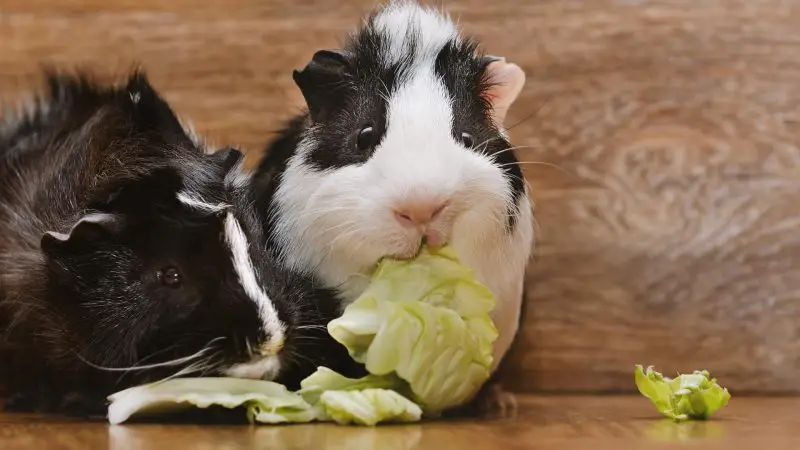
In sensible amounts, the cabbage family is a genuinely nutritious fresh food for guinea pigs. The benefits include:
- Vitamin C. Guinea pigs cannot make or store vitamin C and develop scurvy without it. Cabbage, and especially red cabbage, kale and mustard greens, are excellent sources that support the immune system and help prevent scurvy.
- Antioxidants. These veg are loaded with antioxidants (such as sulforaphane, kaempferol and the anthocyanins that make red cabbage purple) that mop up free radicals, support cell health and have anti-aging effects.
- Low in fat & calories. The whole family is low in fat, calories and cholesterol, so it makes a satisfying treat without risking obesity.
- Fiber for digestion. Dietary fiber supports a healthy gut and helps prevent constipation — in moderation (too much can do the opposite, see risks).
- Heart & bone support. Potassium supports heart and muscle function and helps regulate blood pressure, while vitamin K and a little calcium support healthy bones and blood clotting.
- Vitamin A & B vitamins. Beta-carotene/vitamin A supports eyesight, skin and immunity, and B vitamins (including B6 and folate) support overall wellbeing.
Nutrition Facts of Cabbage
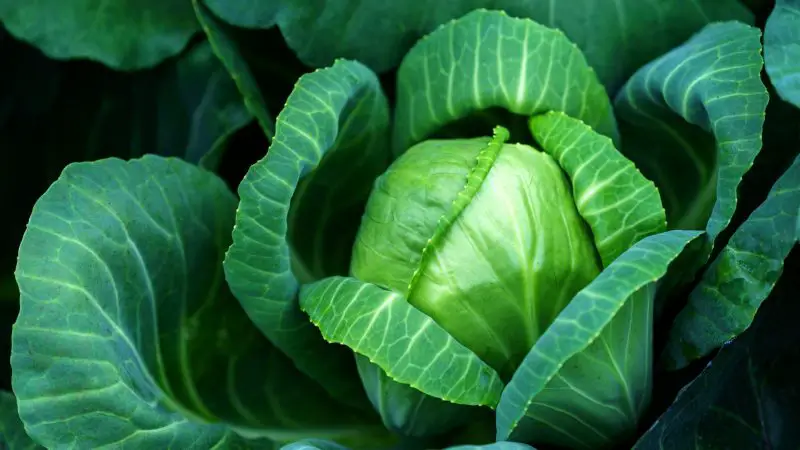
Here is the nutritional value of raw green/white cabbage per 100 g, which is typical of the milder cabbages:
- Energy – 25 kcal (very low)
- Carbohydrates – 5.8 g (sugars 3.2 g)
- Dietary fiber – 2.5 g
- Fat – 0.1 g · Protein – 1.28 g
- Vitamin C – 36.6 mg (the key nutrient for guinea pigs)
- Vitamin K – 76 µg · Folate – 43 µg · Vitamin B6 – 0.124 mg
- Calcium – 40 mg · Magnesium – 12 mg · Phosphorus – 26 mg
- Potassium – 170 mg · Iron – 0.47 mg · Sodium – 18 mg
The big differences between family members come down to two numbers: vitamin C (red cabbage and kale are highest) and calcium (kale, mustard greens and bok choy are the highest, savoy and cauliflower the lowest). Those two figures are what decide how often each one should appear in the bowl.
Is Cabbage Bad for Guinea Pigs? | Possible Risks
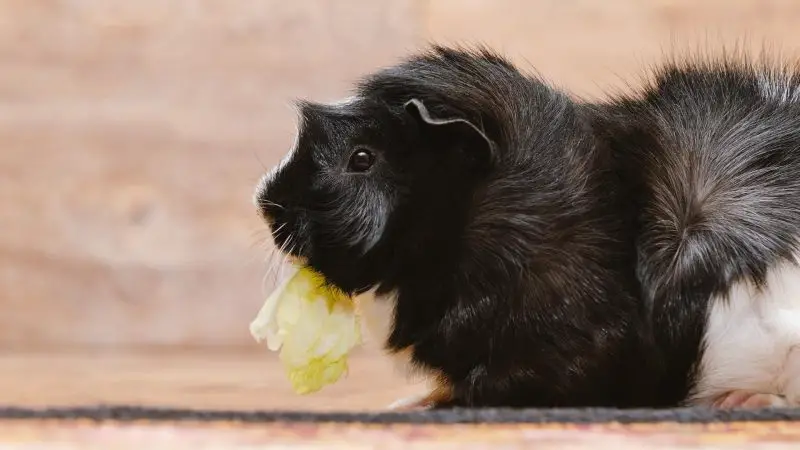
- Gas & bloating — the main reason for moderation. Cruciferous veg contain a sugar called raffinose plus sulfur compounds that ferment in the gut and produce gas. Guinea pigs can’t easily pass gas, so too much cabbage causes painful bloating and flatulence — and severe bloat can be dangerous. This is why every veg on this page is a small, occasional treat, not a daily staple.
- Excess calcium → bladder & kidney stones. Kale, mustard greens and bok choy are higher in calcium, which can build up in the urinary tract and cause painful or bloody urination and eventually stones. Limit the high-calcium ones especially, and see a vet if you spot blood in the urine or straining.
- Digestive upset & diarrhea. Too much of any of these, or feeding them too often, can cause loose stools, an upset stomach and diarrhea. Introduce any new veg slowly and in tiny amounts.
- Goitrogens (bok choy especially). Cruciferous veg contain goitrogens that can interfere with the thyroid. It’s not a problem in the small, occasional amounts recommended here, but avoid bok choy and limit the others if your pig has a known thyroid issue.
- Always raw, never cooked. Guinea pigs only eat raw, fresh food. Cooking destroys vitamin C and can upset their digestion — never feed cooked cabbage. Wash everything well to remove pesticide residue.
Serving Size & Frequency
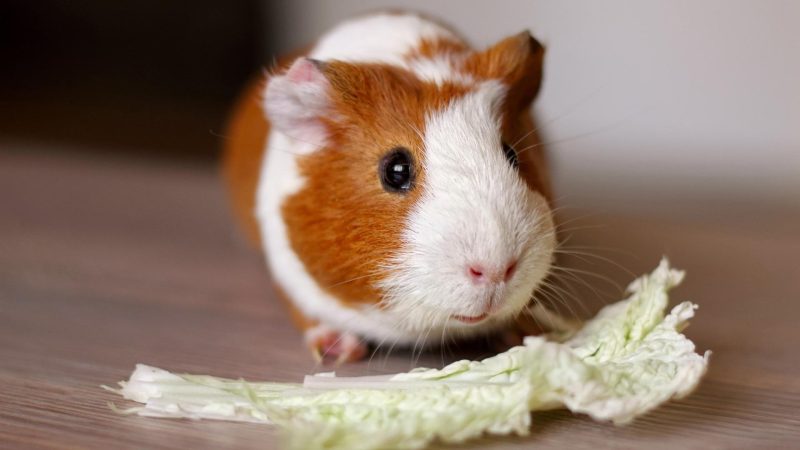
A sensible serving is one or two leaves (about a cup loosely packed), or one to two small cauliflower florets, per guinea pig. For the cabbages (white, red, savoy) aim for two to three times a week; for the higher-calcium leaves (kale, mustard greens, bok choy) and the very gassy cauliflower, stick to once or twice a week. There’s no need to chop leaves small — your pig will happily nibble a whole leaf — but do remove any tough cores.
Always introduce a new veg in a tiny amount first and watch the droppings and behaviour for a day. If you see soft stool, bloating or your pig going off its food, cut it out. And remember these veg are a supplement: unlimited grass hay should make up about 80% of the diet, with a small daily portion of pellets and roughly a cup of mixed fresh veg per pig per day. Rotating different veg keeps calcium intake balanced and the menu interesting.
A Guide to Each Cabbage & Cruciferous Veg
White Cabbage
Guinea pigs can eat white cabbage in moderation. This firm, pale-green head is rich in vitamin C (which strengthens the immune system and helps iron absorption), fiber for digestion, potassium for the heart, and vitamin K and a little calcium for bones. Most pigs enjoy the taste, so it’s easy to introduce. The catch is that, like all the heads, it’s one of the gassiest of the family, so serve a small amount two to three times a week and never cook it. A few pigs can be sensitive to it (diarrhea), so start small.
Red (Purple) Cabbage
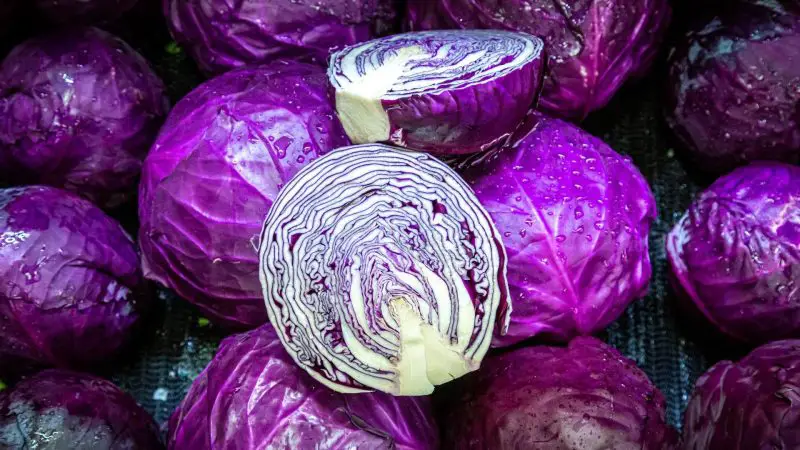
Guinea pigs can eat red cabbage (also called purple cabbage), and it’s one of the better cabbages to offer because it has the most vitamin C of the bunch — great protection against scurvy. The purple colour comes from anthocyanins, powerful antioxidants that also support heart health. It provides fiber, potassium and vitamin K too. Feed one to two small leaves two to three times a week. Like the others it produces gas and contains some calcium, so don’t overdo it.
Savoy Cabbage
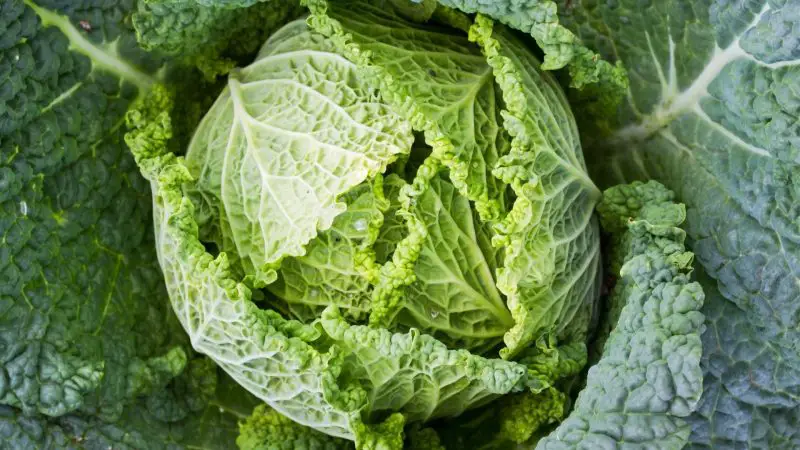
Guinea pigs can eat savoy cabbage in moderation. Savoy is the crinkly-leaved winter cabbage with a milder, sweeter flavour, and pigs tend to like its crunchy texture. It still supplies vitamin C, fiber, folate, vitamin B6 and antioxidants, and it’s the lowest-calcium of the cabbages — which makes it a slightly better choice for pigs that have had urinary issues. It does still produce gas and a little acidity, so keep portions small (two to three times a week) and offer plenty of fresh water. Because its vitamin C is a touch lower than red cabbage’s, make sure other vitamin-C veg are in the rotation too.
Bok Choy (Chinese Cabbage)
Guinea pigs can eat bok choy, but in moderation. This leafy Chinese cabbage (sometimes called pak choi) looks like a cross between a cabbage and a big green onion. It’s a good source of vitamin C, vitamin A, folate and antioxidants that support immunity and may help guard against cancer. Two cautions, though: it’s moderately high in calcium, so too much risks bladder or kidney stones, and as a stronger goitrogen it can interfere with the thyroid — avoid it for pigs with thyroid problems. Offer a small piece or two, or a small handful of leaf, one to two times a week. Some pigs love it and some dislike the taste — if yours refuses it, don’t force it; just offer something else.
Kale
Guinea pigs can eat kale, but only sparingly. Kale is a nutritional powerhouse — very high in vitamin C and vitamin A, with vitamin K, B6, iron, magnesium, potassium and antioxidants like lutein. The problem is its high calcium content (around 150 mg per 100 g) plus some sodium, both of which raise the risk of bladder stones and excess thirst if fed too often. That makes kale a “less often” leaf: one to two small leaves, once or twice a week, mixed with lower-calcium foods. It’s nutritious enough to be worth offering — just not daily.
Mustard Greens
Guinea pigs can eat mustard greens in moderation. These peppery leaves are low in calories and fat but very rich in vitamin C and vitamin A, with vitamin K, B6, iron and magnesium. As with kale, the limiting factor is calcium, so they’re a once-or-twice-a-week green rather than a daily one. A whole or half leaf is a good serving. One nice detail: baby guinea pigs under about six months are growing and can handle a little more calcium, so young pigs can have them slightly more often than adults — but for grown pigs, keep it small and occasional to protect the bladder.
Cauliflower (Florets, Leaves & Stalk)
Guinea pigs can eat cauliflower, but only occasionally. Raw cauliflower is low in calorie, low in calcium, and a good source of vitamin C, vitamin K, fiber and antioxidants. Guinea pigs can eat all parts — the florets, the leaves and the stalk — and the leaves are actually the gentlest part. The big caveat is gas: cauliflower is one of the most raffinose-rich, gassy veg there is, so too much causes bloating, upset stomach and diarrhea. Feed one to two small florets (or a little leaf) once or twice a week, and only ever raw. Test a small piece first and check the droppings — any discolouration or soft stool means it doesn’t suit your pig.
What About Broccoli?
Broccoli is also a cruciferous vegetable and follows the same rules — rich in vitamin C but gassy, so feed it in small amounts a couple of times a week. Because there’s so much to say about it (florets vs. stalk vs. leaves, gas, and serving sizes), we’ve given it a dedicated guide: see Can guinea pigs eat broccoli?
Related Guinea Pig Food Guides
Cabbage is just one part of a varied veg menu. For the full picture, see our complete list of foods guinea pigs can and can’t eat (150+ types). You might also like these popular fresh-food guides:
- Can guinea pigs eat lettuce? — a guide to every safe salad leaf.
- Can guinea pigs eat broccoli? — the other big cruciferous veg, in detail.
- Can guinea pigs eat cucumber? — a hydrating, low-calcium everyday favourite.
Frequently Asked Questions
Can guinea pigs eat cabbage every day?
No. Cabbage and all cruciferous veg produce gas, so they should be an occasional treat — a small portion two to three times a week for the milder cabbages, and only once or twice a week for higher-calcium or very gassy types like kale and cauliflower. Daily feeding risks bloating and digestive upset.
Which cabbage is best for guinea pigs?
Red (purple) cabbage is a great pick because it has the most vitamin C, and savoy cabbage is a good low-calcium option for pigs prone to bladder issues. All cabbages should still be fed in small amounts because of the gas they cause.
Why are kale and mustard greens limited more than cabbage?
Kale and mustard greens are higher in calcium than the cabbages. Too much calcium can build up in a guinea pig’s urinary tract and cause bladder or kidney stones, so these leaves are best kept to once or twice a week in small portions.
Can guinea pigs eat cooked cabbage or cauliflower?
No. Guinea pigs should only eat raw, fresh veg. Cooking destroys the vitamin C that makes these foods worth feeding and can upset their sensitive digestion. Always serve cabbage-family veg raw, fresh and well washed.
Can guinea pigs eat bok choy?
Yes, in moderation — a small amount one to two times a week. Bok choy is moderately high in calcium and is a goitrogen, so avoid it for guinea pigs with thyroid problems and don’t feed it too often.
Quick Facts on Cabbage & Cruciferous Veg
- Cabbage, cauliflower, broccoli, kale, bok choy and mustard greens all belong to the same plant family (Brassica), which is why they share the same gassy, vitamin-C-rich profile.
- Cabbage is one of the oldest cultivated vegetables, thought to have been grown in Europe for centuries.
- Red and green cabbage taste almost the same; red cabbage just carries extra antioxidant pigments (anthocyanins).
- Savoy is the crinkly-leaved winter cabbage with the mildest flavour and the lowest calcium of the cabbages.
- Bok choy is also known as Chinese cabbage or pak choi and looks like a leafy green onion.
- Cauliflower comes in white, orange, green and purple — all are fine for guinea pigs raw and in moderation.
- China is the world’s largest producer of cabbage and cauliflower.
We’ve also made a full list of foods that guinea pigs can and can’t eat (150+ Types of Foods). Be sure to also check our recommended products page for everything you’ll need to keep your guinea pigs happy and healthy. Hope this helped you find the answer you were looking for!
Related Guinea Pig Guides
List of Sources
RSPCA — What To Feed a Guinea Pig
How to Care For Your Pet Guinea Pig
The Effects of Diet on Anatomy, Physiology and Health in the Guinea Pig