
Table of Content
Quick Answer: Can Guinea Pigs Eat Peppers?
Yes — guinea pigs can eat sweet (bell) peppers of every colour, and they’re one of the best vitamin-C vegetables you can offer. Red, orange and yellow bells are the sweetest and richest in vitamin C; green bell peppers are the least sweet and lowest in sugar and calories. Feed one to two thin slices (about half of a small pepper) per guinea pig, 2–3 times a week — not a whole pepper, and not every day — and always remove the seeds, stem and leaves. The one type to never feed is hot or spicy peppers — jalapeños, chili and banana (hot) peppers — because the capsaicin that makes them spicy badly upsets a guinea pig’s delicate stomach.
Bell peppers are a staple in my own guinea pigs’ veg rotation precisely because they pack so much vitamin C without much calcium. Below is an at-a-glance comparison of every pepper colour (plus how the spicy ones differ), followed by a short guide to each one.
Peppers for Guinea Pigs at a Glance
| Pepper type | Safe? | Vitamin C (per 100 g) | How often | Key notes |
|---|---|---|---|---|
| Red bell | ✅ Yes | ~128 mg | A few times a week | The sweetest bell; very high vitamin C & vitamin A. Highest sugar, so watch the portion. |
| Orange bell | ✅ Yes | ~147 mg | 2–3 times a week | Sweet and mild; excellent vitamin C and low in calcium. |
| Yellow bell | ✅ Yes | ~184 mg | A few times a week | Highest vitamin C of all the colours; sweet and well-liked. |
| Green bell | ✅ Yes | ~80 mg | 2–3 times a week | Least sweet, lowest in sugar & calories; a touch higher in calcium. |
| Purple / white / brown bell | ✅ Yes | Moderate–high | Now and then | Treat like any sweet bell — small amounts, seeds removed. |
| Mini sweet peppers | ✅ Yes | High | A few times a week | Small, extra-sweet bells — fine in moderation. |
| Jalapeño, chili & hot peppers | ❌ Never | n/a | Don’t feed | Spicy capsaicin causes pain, cramps and diarrhea — see our jalapeño guide. |
Are Peppers Good for Guinea Pigs? | Health Benefits
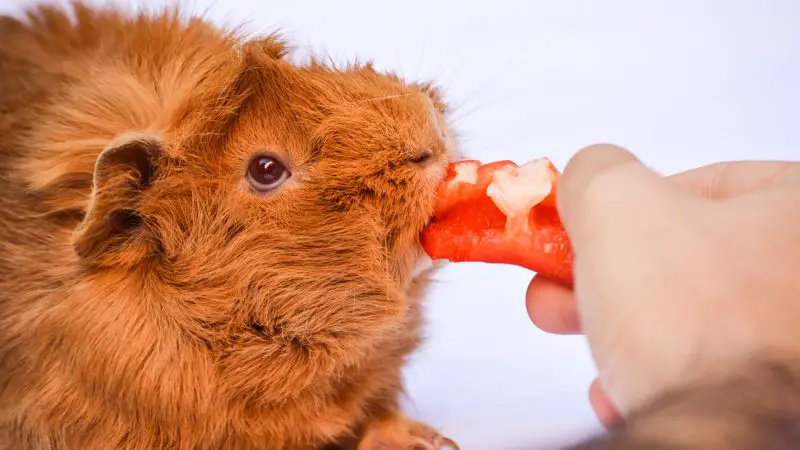
Sweet bell peppers are low in calories and genuinely good for guinea pigs. The main benefits are:
- Vitamin C & scurvy prevention. This is the big one. Guinea pigs can’t make or store their own vitamin C, and without enough they develop scurvy — a serious, potentially fatal disease. Bell peppers are one of the richest vitamin-C vegetables you can feed, which makes them an excellent way to help meet that daily need.
- Antioxidants & immunity. Peppers are packed with vitamin A and other antioxidants that mop up free radicals, lowering disease risk and keeping the immune system strong.
- Eye health. The carotenoids lutein and zeaxanthin (especially high in green and orange bells) support healthy eyesight.
- Healthy blood. Iron helps prevent anemia, and the vitamin C in the same pepper actually boosts how well that iron is absorbed. B6 also supports red-blood-cell formation.
- Digestion. A modest amount of fiber supports steady bowel movements — helpful in the right portion (too much causes the opposite, see risks below).
- Strong bones & teeth. Vitamin K supports bone and tooth development, while minerals like magnesium and potassium support muscle and heart function.
Nutrition Facts of Peppers for Guinea Pigs
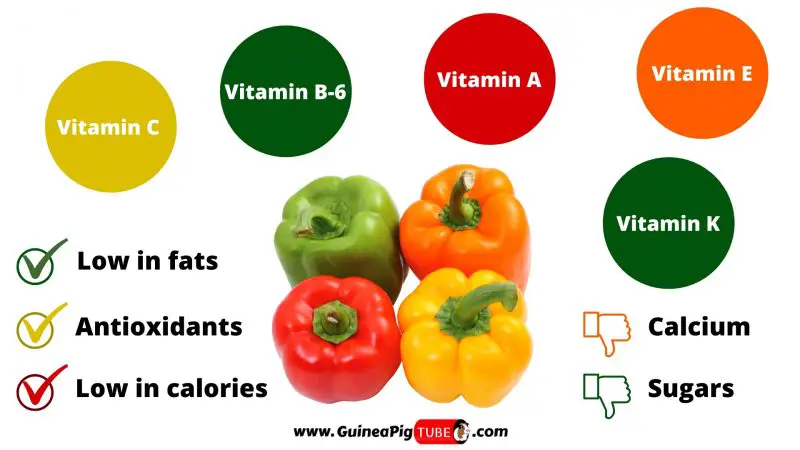
Here’s how the colours compare per 100 g of raw pepper (USDA data). Notice that all of them are vitamin-C powerhouses, that yellow and orange edge out red and green for vitamin C, and that green carries a little more calcium — the nutrient to keep an eye on for adult guinea pigs.
| Nutrient | Green | Yellow | Orange | Red |
|---|---|---|---|---|
| Energy | 20 kcal | 27 kcal | 31 kcal | 26–31 kcal |
| Carbs | 4.64 g | 6.32 g | 7 g | 6.03 g |
| Dietary fiber | 1.7 g | 0.9 g | 1.7 g | 2.1 g |
| Sugars | 2.4 g | — | 4.3 g | 4.2 g |
| Calcium | 10 mg | 11 mg | 7 mg | 7 mg |
| Iron | 0.34 mg | 0.46 mg | 0.26 mg | 0.43 mg |
| Potassium | 175 mg | 212 mg | 166 mg | 211 mg |
| Vitamin C | 80.4 mg | 183.5 mg | 146.7 mg | 127.7 mg |
| Vitamin B-6 | 0.224 mg | 0.168 mg | 0.17 mg | 0.291 mg |
| Vitamin A | 18 µg | 10 µg | 159 µg | 157 µg |
| Lutein + zeaxanthin | 341 µg | — | 208+ µg | 51 µg |
To put the vitamin C in context: a guinea pig needs only around 10–30 mg of vitamin C a day, so even a couple of small slices of bell pepper make a real contribution. That’s why peppers are so often recommended as a vitamin-C-rich fresh food — just remember they’re a supplement to hay and a varied veg bowl, not a vitamin tablet.
Are Peppers Bad for Guinea Pigs? | Possible Risks
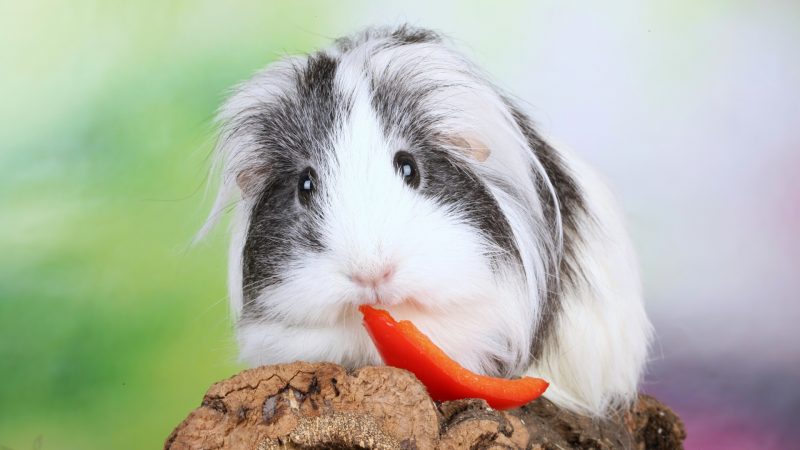
- Too much sugar → digestive upset. Bell peppers (especially red and orange) contain natural sugars that a guinea pig’s sensitive gut handles poorly in excess. Overfeeding can cause painful digestion, gas, bloating, cramps and loose stools — and over the long term, weight gain or even diabetes.
- Excess calcium → urinary problems. Adult guinea pigs need very little calcium, and too much can lead to bladder or kidney stones, urinary infections, bloody urine and painful urination. Peppers are fairly low in calcium (green slightly higher than the others), but it’s still a reason to keep portions modest.
- Allergies. Rarely, a guinea pig can react to peppers. The first time you offer them, watch for vomiting or diarrhea; if you see either, stop and check with a vet.
- Hot & spicy peppers are off-limits entirely. This is the most important risk — see the dedicated section below.
Serving Size & Frequency
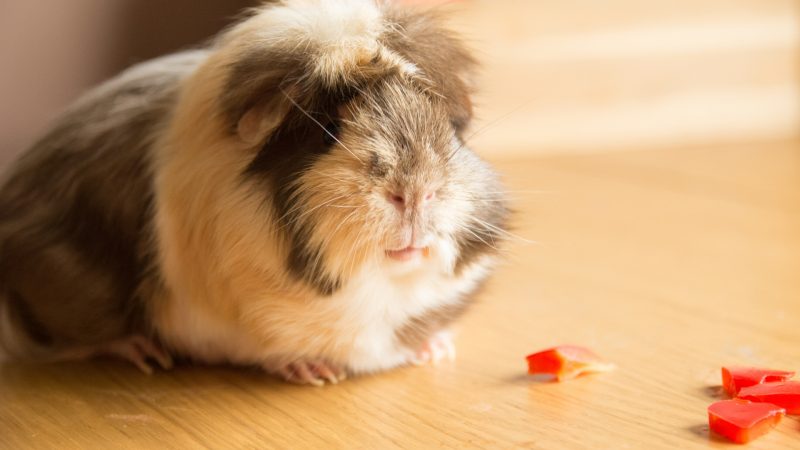
A sensible serving is one or two thin slices — roughly half of a small pepper, or about half a cup of chopped pepper — per guinea pig, 2 to 3 times a week. Don’t feed a whole pepper in one sitting (it’s far too much for such a small animal and guinea pigs often don’t know when to stop eating), and don’t feed peppers every single day — rotate them with other fresh vegetables so the diet stays varied and the sugar and calcium stay in check.
How to prepare peppers: wash the pepper thoroughly (to remove pesticide residue), cut off the top and remove the stem, slice it open and scoop out the seeds and the white pith, then cut into small slices. Always serve it raw and fresh — never cooked, as a guinea pig’s digestive system can’t handle cooked food, and heat destroys the very vitamin C that makes peppers worth feeding. Fresh veg like this is a supplement: unlimited grass hay should still make up about 80% of the diet, alongside a small daily portion of pellets.
A Guide to Each Colour of Pepper
Bell Peppers / Sweet Peppers — the Safe Family
Guinea pigs can eat all sweet bell peppers — they’re completely safe and, in fact, the only peppers guinea pigs should eat. Bell peppers (also called sweet peppers) are sweet, crunchy, rich in vitamin C and antioxidants, and low in calories. Every colour below is simply a bell pepper at a different ripeness or variety; the differences are in sweetness, sugar and vitamin levels rather than safety. Mini sweet peppers are just smaller, often sweeter bells and are fine in the same moderate amounts.
Red Peppers — the Sweetest
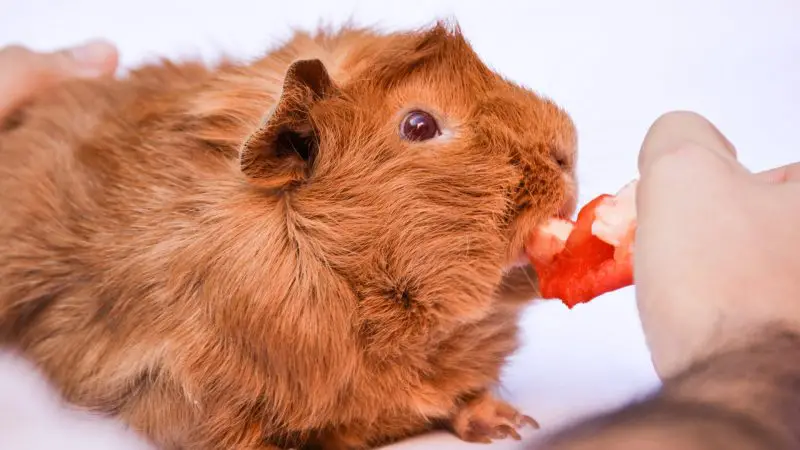
Guinea pigs can eat red bell peppers, and most pigs love them. A red pepper is simply a green pepper that has been left on the plant to fully ripen, which makes it the sweetest of all the bell peppers. It’s especially high in vitamin C and vitamin A, plus iron, manganese and vitamins E, K, B6 and B-complex — your pig gets real benefit even from a single slice. The trade-off is that red peppers have the highest sugar content of the colours, so feed only a slice or two a few times a week to avoid digestive upset.
Orange Peppers
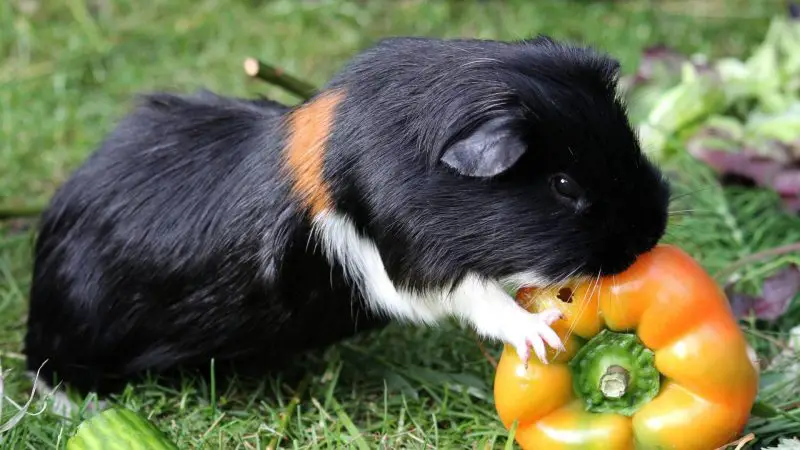
Guinea pigs can eat orange bell peppers. Sitting between green (least ripe) and red (most ripe) on the ripeness scale, orange peppers are sweet, mild and a great source of vitamin C and antioxidants — with low calcium, which is a bonus. They also bring iron, vitamin A, vitamin K for bones and teeth, and the eye-supporting carotenoids lutein and zeaxanthin. Because of their sugar content, offer a small amount (a slice or two) 2 to 3 times a week rather than daily, and never leave a whole pepper in the cage.
Yellow Peppers
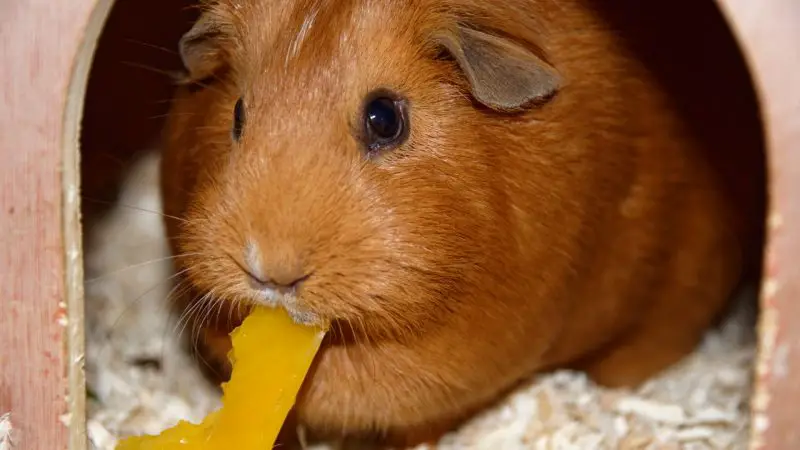
Guinea pigs can eat yellow bell peppers, and they’re safe and good for them in moderation. Yellow peppers are mild and sweet and actually carry the highest vitamin C of all the colours, along with heart-friendly minerals like iron, magnesium and potassium. They do contain some calcium and sugar, so — just like the other bells — feed a slice or two a few times a week, not every day.
Green Peppers
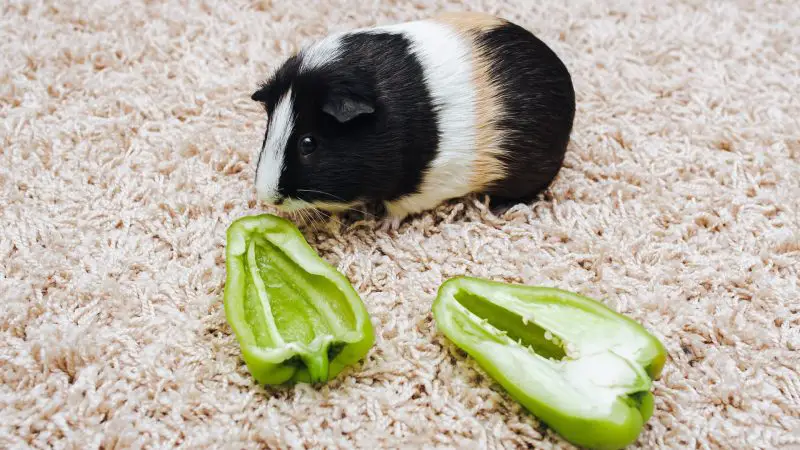
Guinea pigs can eat green bell peppers. Green peppers are the unripe version of red peppers, so they’re the least sweet and the lowest in sugar, fat and calories — which makes them a great everyday-friendly choice for a pig that needs to watch its weight. They’re still rich in vitamin C (the lowest of the colours, but well above most other veg), plus vitamin A, vitamin E, vitamin K and the eye carotenoids lutein and zeaxanthin, in which they’re especially high. The one caveat is that green peppers carry slightly more calcium than red or orange, so keep them to 2–3 times a week and pair them with other low-calcium foods. Feed them raw — heat destroys the nutrients.
Purple & Other Coloured Bell Peppers
Guinea pigs can eat purple bell peppers — and white or brown ones too — and they’re safe. Like the more common colours, purple bells offer vitamin C, vitamin A and antioxidants for overall health. Because they still contain sugar and a little calcium, treat them exactly like any other sweet bell: small amounts, not too often, seeds and stem removed.
Hot & Spicy Peppers: Never Feed These
Guinea pigs must never eat hot or spicy peppers. Chili peppers contain capsaicin — the compound that creates the heat — and a guinea pig’s small, sensitive digestive system simply can’t cope with it. Even a taste can cause real pain, a crampy and bloated stomach, diarrhea, and a panicked, distressed pig. The vitamins inside a hot pepper don’t make up for it; there is no safe amount.
- Jalapeños. These medium-heat green chilies are a definite no. We cover exactly why in our dedicated guide: can guinea pigs eat jalapeños?
- Hot banana peppers. Part of the chili family and harmful to guinea pigs. Confusingly, there are also sweet banana peppers, which taste like a bell and are safe in the same small amounts — just be sure you have the sweet kind, not the hot one.
- Any other chili or spicy pepper — cayenne, serrano, habanero and the like — should be kept well away from your guinea pigs, along with any spicy or seasoned human food.
Pepper Seeds, Stems & Leaves
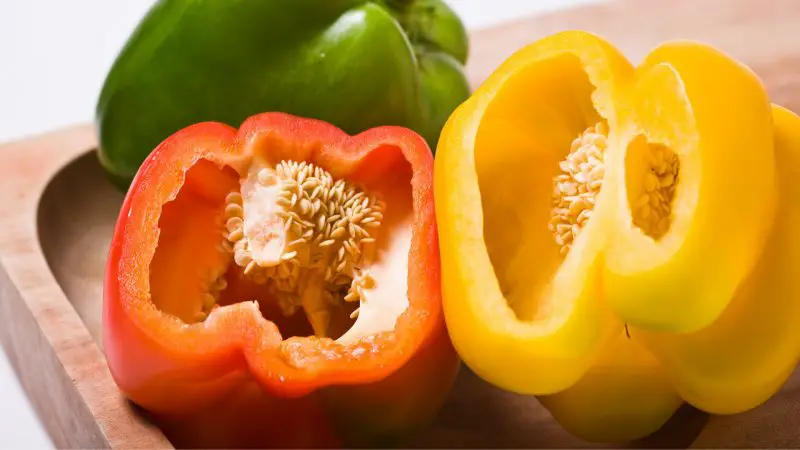
- Seeds — remove them. Bell pepper seeds aren’t toxic, but they’re a choking hazard and can taste bitter, so it’s safest to scoop them out before feeding. This is true for every colour.
- Stems & tops — remove them. The stalk and the leafy green top can contain alkaloids that are toxic to guinea pigs, and the stem is tough on their teeth. Cut these off.
- Leaves — don’t feed. Pepper plants belong to the nightshade family, and the leaves contain alkaloids that can be toxic. There are plenty of safe leaves to feed instead — there’s no reason to risk pepper leaves.
Do Guinea Pigs Like Peppers?
Most guinea pigs love peppers — they’re sweet, crunchy and full of flavour, and red peppers (the sweetest) tend to be the firm favourite. As with people, though, every pig has its own taste, so don’t worry if yours turns its nose up at one colour. If peppers aren’t a hit, there are plenty of other vitamin-rich veggies to try, such as broccoli, cucumber, spinach or tomatoes.
Related Guinea Pig Food Guides
Peppers are just one part of a healthy, varied diet. For the complete picture, see our complete list of foods guinea pigs can and can’t eat (150+ types). You might also like these popular fresh-food guides:
- Can guinea pigs eat broccoli? — another vitamin-C powerhouse.
- Can guinea pigs eat cucumber? — a hydrating everyday favourite.
- Can guinea pigs eat tomatoes? — a fellow nightshade, safe with care.
- Can guinea pigs eat jalapeños? — why the hot ones are off the menu.
Frequently Asked Questions
What colour pepper is best for guinea pigs?
All sweet bell peppers are good. Yellow and orange have the most vitamin C and are sweet and mild; red is the sweetest (and highest in sugar); green is the lowest in sugar and calories. Rotating the colours gives your pig the best mix.
Can guinea pigs eat peppers every day?
It’s best not to. Offer a slice or two of bell pepper 2–3 times a week and rotate with other vegetables. Feeding peppers daily adds up to too much sugar and calcium for a guinea pig’s sensitive system.
Can guinea pigs eat jalapeños or hot peppers?
No. Jalapeños, chili and other hot peppers contain capsaicin, which causes pain, cramps and diarrhea in guinea pigs. Only sweet bell peppers are safe — never the spicy kind.
Should I remove the seeds from peppers?
Yes. Bell pepper seeds aren’t poisonous, but they’re a choking hazard and can be bitter, so scoop them out. Also remove the stem, top and any leaves, which can contain toxic alkaloids.
How much pepper can a guinea pig have?
About one to two thin slices — roughly half a small pepper, or half a cup chopped — per pig, a few times a week. Never give a whole pepper at once, and always serve it raw, fresh and washed.
Quick Facts on Peppers
- Red bell peppers are simply green peppers that have been left to ripen fully — and they’re sweeter and richer in vitamin C as a result.
- Sugar and nutrition both increase as a pepper ripens from green to red.
- Botanically, bell peppers are a fruit (they have seeds and grow from a flower), even though we cook with them as a vegetable.
- Peppers belong to the nightshade family, alongside tomatoes and chili peppers.
- Bell peppers are native to South and Central America; their seeds reached Spain in 1493 and spread to the rest of Europe and Asia from there.
- The most common colours are green, red, orange and yellow, but purple, white and brown bells also exist.
- A pack of one green, one yellow and one red pepper is often sold as “Traffic Light Peppers.”
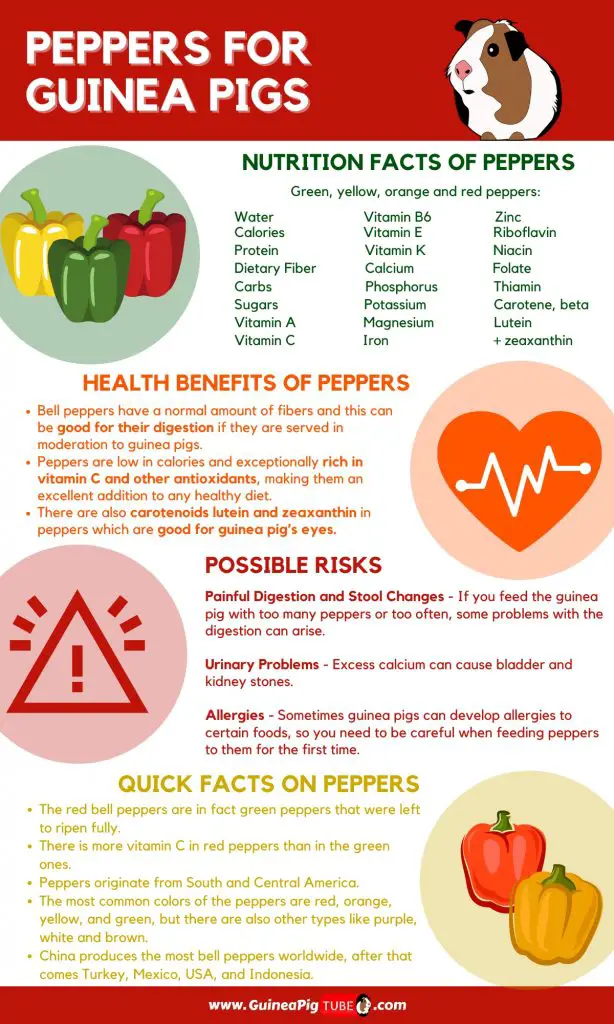
We’ve also made a full list of foods that guinea pigs can and can’t eat (150+ Types of Foods). Be sure to also check our recommended products page for everything you’ll need to keep your guinea pigs happy and healthy. Hope this helped you find the answer you were looking for!
Related Guinea Pig Guides
List of Sources
RSPCA — What To Feed a Guinea Pig
USDA FoodData Central — Peppers, Sweet, Red, Raw
Nutrient Requirements of Laboratory Animals: Fourth Revised Edition